Activism against war and injustice is embedded in the DNA of American literature. Henry David Thoreau spent a night in jail after refusing to pay a poll tax to finance the war with Mexico. Walt Whitman, who witnessed the horrors of war as a volunteer nurse, was never shy in making his political sympathies clear. His elegies for Lincoln (“O Captain! My Captain!” and “When Last in the Dooryard Lilacs Bloom’d”) are arguably among the most powerful poems about a public event in the American canon.
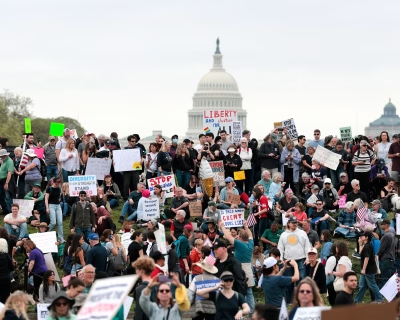
In the twentieth century, many poets fiercely opposed America’s foreign wars and faced severe consequences as a result. Robinson Jeffers’s popularity plunged due to his opposition to America’s entry into World War Two, and his reputation was not restored until years after his death. Refusing to join the military for reasons of conscience, William Stafford was interned in Civilian Public Service work camps from 1942 to 1946. Conscientious objectors faced severe public disdain, and Stafford came close to being lynched by a hostile local crowd. Later, many prominent American poets actively protested the Vietnam War through public demonstrations and anti-war poetry. At the turn of the twenty-first century, poet and publisher Sam Hamill emerged as a leader helping to build wide-spread opposition to the Iraq Wars, famously organizing a boycott of a poetry event at the White House. The case for racial justice has also been presented eloquently by many American poets, including Langston Hughes, Gwendolyn Brooks, Joy Harjo, Adriana Ramirez, and Terrence Hayes.
Inevitably, not all poets have been on the same side of major issues. James Dickey’s support for the Vietnam War drew sharp criticism from other poets. Robert Penn Warren’s conservative opinions on racial segregation evolved into a more enlightened view in his later years, but charges of racism continue to damage his reputation long after his death. Recent revelations of Wallace Stevens’s overt racism have severely hurt his standing as well. The antisemitism in Henry Miller’s writing is downright offensive to me although his fans love his portrayal of New York in the early twentieth century.
Today, the issue of Israel’s occupation of Gaza deeply divides America’s literary community. Contention recently occurred at an Autumn House Press fundraiser in Pittsburgh when featured poet Samuel Hazo, who is Arab-American, accused Israel of genocide, and several high-profile donors stormed out of the room.
The American right wing would have us ignore the fact that our country was founded on the genocide of Native Americans and the enslavement of Africans while having us support the whole-sale slaughter of brown and black people that continues today. According to Brown University’s Cost of War Project, since 1946 the United States has killed several hundred thousand civilians with bombs and bullets and over 4.5 million civilians by indirect means, including war-induced disease, famine, and infrastructure collapse. In the two years following the October 7, 2023 Hamas attack on Israel, the U.S. government spent $21.7 billion on military aid to Israel and $9.65 – $12.07 billion on related operations in the wider Middle East, for a total of over $31 billion, and these amounts have approximately doubled in the last year. Enabled by the military and diplomatic support of the United States, Israel has killed over 73,000 Palestinians in Gaza and over 1,200 during settler-related incidents in the occupied West Bank, small potatoes for the centuries-old American war machine, but devastating for the people of the region.
Into this raucous tradition of violence and dissension, Edward Salem, born in Detroit to Palestinian parents, arrives with his provocations. Formerly a mixed media artist working in performance, street interventions, and experimental film, his art has been exhibited in Ramallah, Beirut, and Madrid. He is the cofounder of City of Asylum/Detroit, a nonprofit that provides safe-haven fellowships to writers and artists in exile who have been persecuted for their work. Salem’s debut poetry collection Monk Fruit (Nightboat, 2025) was praised by critics for creating a new approach to political poetry. Christopher Spaide, writing for Lit Hub, asserted that Salem’s poems reside at “the crossroads of two traditions of the absurd, part Samuel Beckett monologue, part Wile E. Coyote. . . all the language that offends upstanding audiences and all the violence that apparently doesn’t.”
Salem’s second collection Intifadas (Sarabande, April 2026) was selected by the American poet and essayist Hanif Abdurraquib as the winner of the Kathryn A. Morton Prize in Poetry. In his introduction, Abdurraquib confesses to have been trapped for years in a rage about the injustices committed against people of color, but when he was given a ragged copy of Enemy of the Sun, a seminal 1970 anthology of Palestinian resistance poetry, he awakened to the varied possibilities of political poetry:
The copy was falling apart, because it had been passed down to my pal from his father, and cherished, because at the time, the book was out of print. I had, at the time, believed myself to be someone who understood the history of Palestinian resistance, and yet, when I spent time, in depth, with the poems, I came to think differently about resistance and rage. The poems were also love poems, also poems of music and slow mornings, and sharing food. Yes, there were poems of rising up against occupation, but even those were charged with love, one of the primary colors that can, if we allow it, be at the core of our rage.
And indeed, Salem’s collection exhibits the entire range of emotions that love contains. Rage, desire, praise, pain, gratitude, affection, homesickness, awe, regret, resentment, tenderness, fear and humor make up the complex feeling-universe of this book. For example, in the poem Eclipse, the poet both welcomes and fears the coming of a Third Intifada:
All I could think was the scores
of men my age and younger
who would be slaughtered,
and how I wanted it anyway,
the uprising.
(Eclipse)
In Exile’s Terrarium, the poet describes a sculpture he is planning to build made from the soil and stones of Palestine, but his plans are thwarted by the impracticality of transplanting a living olive tree across the world. Some entities — trees, poems, love — are rooted in a specific place and to transplant them is to kill them. In other poems, Salem describes his film and multimedia projects as being inadequate, pointless, or even silly, because they cannot effectively counter the horrors being done to his people:
Why Isn’t There a Third Intifada?
What dumb fun I had, making the artworks I made,
driving around Birzeit University campus filming Maissa
sticking her head out the window shouting through a bullhorn,
her hair whipping in the wind as she delivered my lines
to the bewildered, beautiful students laughing with us
at the notion that they should go riot and
die at the checkpoints.
Salem doesn’t dodge the ethical and emotional contradictions intrinsic to being a captive people. His Egyptian friend points out that he is more “Palestinian” than the Palestinians because he continues to resist colonialism while most Palestinians are simply trying to survive it. In “Slingshot Sutra” the poet asserts that he doesn’t want to be a Palestinian poet, that is, to provoke a “knife fight with a battleship.”
Clearly, the poet’s identity as a Palestinian American sits uneasily with him. The long poem Bust of a Pugilist bounces back and forth between America and Palestine, the speaker not feeling entirely at home in either country. Another poem recounts an incident in which Salem is arrested by Palestinian police who are being trained by Israelis to suppress riots. The police, who are deeply conflicted about their role, lecture him about the danger to his wife if his activism became public:
Blushing, they handed the camera back,
had me delete in front of them my grainy videos
of their collaboration with our neighbors,
then walked me by the arm outside to the jeep
and dropped me off downtown unharmed,a twisted gratitude in their indignant eyes.
(I hid in the bushes)
Like the Palestinian police cooperating with the Israelis, Salem agonizes over competing loyalties. The poet’s portrayal of his dual identity goes to the heart of what it is to be an American immersed in popular culture while also being aware of the struggles of his people on the other side of the world. He subjects his dogs to recordings of Fiona Apple, just as his father subjected him to recordings of Farid al-Atrash. In Gaza, he thinks about James Dean and Marilyn Monroe. In Detroit, he sees someone wearing a Scarface hoodie with Al Pacino on the front and it makes him think of a boy he met in Gaza.
Salem’s loyalties are divided not only between America and Palestine, but also between members of his own family. Salem’s wife is an anti-Zionist Jew, and he acknowledges that the Jews who took Palestinian land in 1948 were themselves homeless and traumatized. He recognizes the important work that Code Pink and Jewish Voice for Peace are doing for peace and justice. An American Thanksgiving dinner is accidentally interrupted by a Bluetooth recording of a grieving father wailing in Arabic for his murdered family. Salem suffers the humiliation of hearing his abusive father call him “Little Jew” because of his loyalty to his wife.
In the middle of the book, a prose narrative recounts Salem’s attempts as a teenager in Paris to use a sledgehammer as an artist’s tool to disrupt the smug conventions of traditional western art. Fortunately, he doesn’t follow through with his plan to deface the exterior of the Louvre; instead, buying a sledgehammer and contemplating the act are sufficient. The reader fears that the young man will do something foolish that will land him in prison, so when he fails to follow through, we’re relieved rather than disappointed by the anticlimax. His failure to act becomes a moral triumph, of sorts. Throughout the collection, Salem portrays his attempts to create political art as well-intentioned but naive.
Despite the seriousness of the subject, or perhaps because of it, many of the poems in this collection are dead funny. Noting the anatomical effect of the extremely salty water of the Dead Sea, Salem begins a poem:
No one tells you your asshole will sting
in the Dead Sea. There should be signs.
Depending on how well-kept your asshole is,
it could go on fire in there. Against all warnings,
I had my cousin film me repeatedly dunking
my head into the brown-green water, the saltiest
water on earth, forcing my burning eyes open
as much as I could, as he tried to keep my face
in extreme close-up for the failed piece
of video art I was trying to make…(Dead Seer)
The great Palestinian poet Mahmoud Darwish is always in the background expressing the memory, sorrow and aspirations of the Palestinians, but Edward Salem is not Mahmoud Darwish, rather he is Charlie Chaplin, the little tramp who roller-skates blindfolded, spinning right to the edge of the precipice without realizing the danger. Chaplin’s starving hero is forced to eat his own shoe, so he sprinkles salt on it and tries to enjoy the meal. In this spirit, Salem’s street theater is absurdly disruptive — practical jokes designed to make a point. He lies down in front of a synagogue, pretending to be dead. He pours black paint on the ground in a park where the Israelis are commemorating the war in Gaza. He dumps a bag of road salt on the floor of a Starbucks to protest Gazans having to drink saltwater.
The metaphors in the poems have the same quality of allegory as his street theater. The poet attempts to rescue a moth trapped in a garage, showing a degree of mercy that his people have been denied. He dreams of slapping the faces of dead Palestinians with his American passport. His rebellious jokes and surrealistic metaphors are attempts to stay sane in a world gone mad. Salem has been forced into a fight rigged against him, so like Chaplin, he employs fancy footwork, ducking behind the referee’s trousers until he accidentally knocks out his opponent after inventing his own rules.
Salem’s poems are too emotionally ambivalent to be effective propaganda. They are also more subtle, humorous and complex than any political documentary. The Palestinians in these poems survive in a pitiless society not by acting heroically, but by stoically enduring starvation and humiliation. In Salem’s world, the Jewish people, many of whom are openly opposed to oppression and genocide, are not villains, but rather the Israeli military, the American Empire which finances it, and the indifference of the American and Israeli people are a monolith, an enemy without a face. Notice the unspecific plural of the book’s title. This is not a collection about The Intifadas, referring to the uprisings by Palestinians from 1987-2005, but rather an account of various attempts to overthrow the status quo on many fronts. The poems represent a shaking off (the literal meaning of intifada) of the easy assumptions about one man’s many-layered life: the personal, the political, the familial and the artistic.
Seen as a whole, this collection is a self-deprecating narrative of the journey of an artist to confront the absurd world he was born into. Intifadas is a collection that becomes more than a cry for freedom; instead, it takes up the very essence of what it is to be an artist in a shifting cultural environment where injustice is sewn into the very fabric of life to a degree where even the oppressed themselves are complicit in their humiliation and destruction. The Israelis who are violently oppressing Palestinians are held to account, as they should be, but with that condemnation is a recognition of the poet’s contradictory loyalties. Salem loves his Palestinian father, but also resents him. He is committed to the Palestinian people, but also to his Jewish wife. He identifies with Palestinians, but understands he’s a privileged American. Certainly Salem’s attitude is subversive in his opposition to his people’s land being stolen, but he is also idealistic in his searching for a way to embrace the intricacy of being a self-aware artist rather than a mere propagandist. Through tragic irony and self-deprecating slapstick, the poet discovers his complicated identity as an idealistic Palestinian American in a world that is both beautiful and unjust.
Edward Salem’s Intifadas is a remarkable achievement, one destined to become an American classic.