

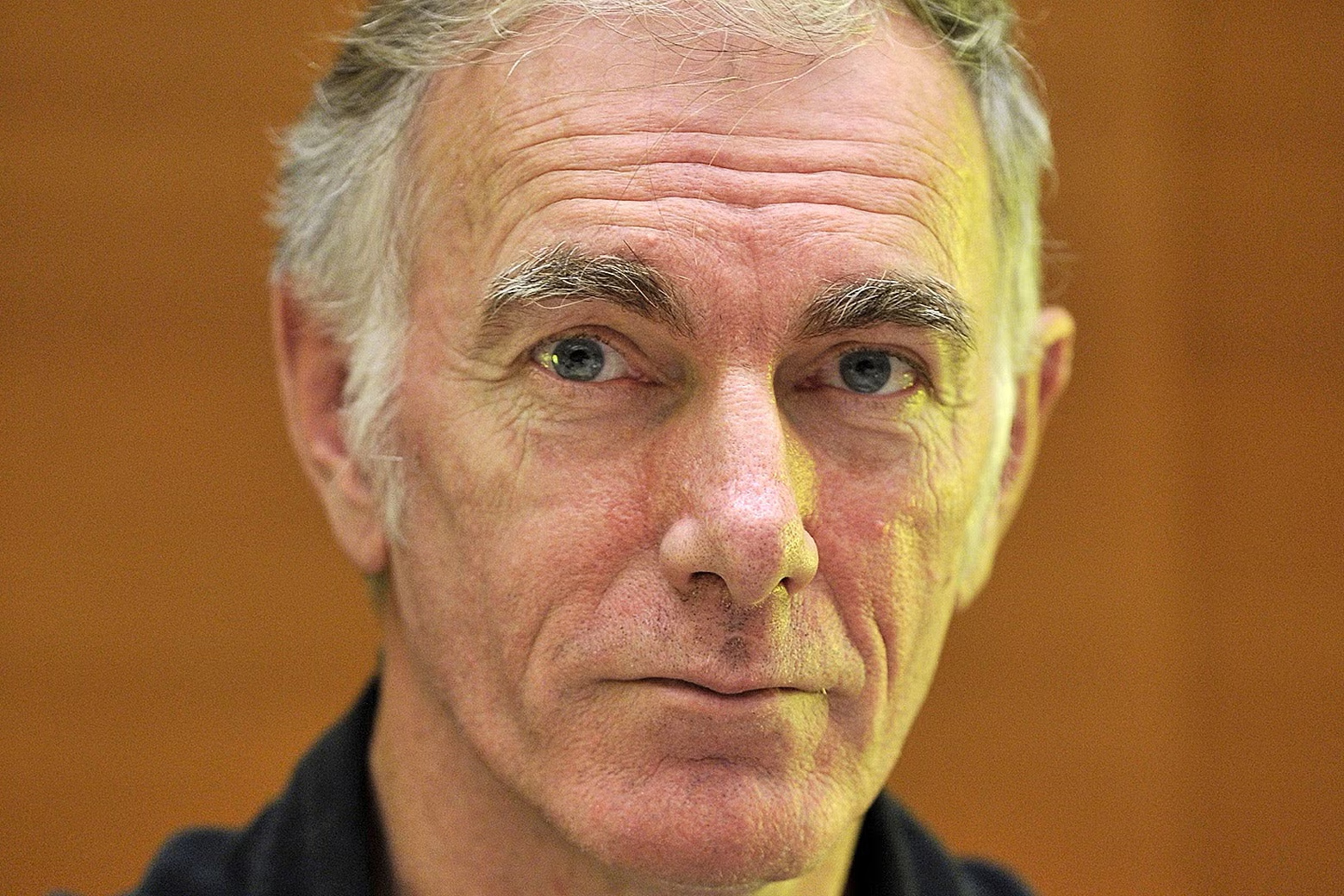
John Sayles is the Oscar-nominated writer/director of such films as Matewan, Eight Men Out, and Lone Star, and as well a National Book Award-nominated author of novels such as Union Dues, A Moment In the Sun, and most recently his sprawling epic about the Ford Company, Crucible.
We spoke with Sayles about a number of topics from his new novel to unions, automation, and the inevitable comparisons between Henry Ford and Elon Musk. (Be sure to check out the full interview over at Third Person Limited)
Mason Stockstill
…So much of your history as a writer and a filmmaker goes to not just all the other people circling around Henry Ford or impacted by them – to use this novel as an example – but goes explicitly toward… I used to work at a labor union and we used the term “worker justice,” [where] the people who are working get treated fairly and are able to take control of their destiny in a way that you cannot if you’re not in a union.
And [in] this novel, there’s a lot of that in here. We’ve got Walter Reuther appearing as a character. We’ve got, you know, unions. We’ve got this explicit workers’ point of view as the Ford Project begins in Brazil. How much of this is an intentional project for you, or is it just, “This is who I am, this is what I am interested in, and that’s what’s going to come across in my writing.”
John Sayles
I am interested in the idea of union with a capital “U” and a small “u”. The union movement had lots of jobs that were non-union. And then eventually I got a union job, and I saw the difference.
I grew up in Schenectady, New York, where General Electric had the kind of power that that the auto industry had in Detroit. And I saw that rise and fall, [the] struggle between the, in that case, it was the UAW and General Electric Company. So there’s that kind of official union story.
But then there’s the story of people getting together to do something together, including protect themselves or get better treatment together. And maybe raising some lines that they always kept between themselves, whether that’s men and women, whether that’s age, whether that’s ethnicity, whether that’s race.
People are going to say, well, I don’t have to invite them for dinner. But we have these common interests. Let’s let them into the union and give them a little power in the union, and maybe things are going to work. Well, that’s what any society demands of people, and especially if they’re not going to live under some kind of despotic, overlord government. People are eventually going to have to get together and say, you know what? The people are holding the strings.
They’re keeping us at each other’s throats for a reason. They’re bringing people in from foreign countries for a reason. Making the Matewan movie, I [did] the research for that in West Virginia and Kentucky. The mine owners called it “a judicious mixture,” meaning these people will never get together and challenge us because they hate each other.
In fact, we’re going to make sure they don’t get together. So we’re going to have armed guards in between the neighborhoods that they live, and we’re going to make them enter the mine from different entrances so they won’t even meet each other underground.
And Henry Ford’s River Rouge factory, the service department that Harry Bennett ran, a lot of ex-cons and that kind of thugs. There were about 5,000 of them to cover the various shifts. And if you went to the bathroom, not only was the foreman timing how long you were off the line, but when you got there, there were no doors on the stalls. So you sat there looking at a Ford service man going with you, those arms folded, staring at you [while you] were trying to do your business, making sure that you didn’t talk to the guy in the next stall.
Mason Stockstill
Well, that that certainly reminds me of a certain large retail online operation in this country where [there’s] not the threat of force, but you’re on the clock down to the second so you don’t even have time to talk to somebody.
John Sayles
Yeah. And they are looking into automating. Whatever you do, you’re there at the sufferance of these people. And you know, the auto industry hires so many fewer people than it used to, to put a car together. And that’s inevitable. I mean, in the next two years, an awful lot of white-collar workers are going to lose their jobs because AI can do their job, and probably better than they do it. And it’s going to cost less.
Mason Stockstill
Yeah, we’ve talked about that [on this podcast] whether AI could write novels that people might actually buy at some point.
How much do you think the act of telling these type of stories, and talking about capital “U” Union and little “u”… How much of telling these stories in your career has changed your thinking on this topic? Or do you think that you’re the same, [and] you have the same perspective as when you started out, as a former union worker who started making films and then novels?
John Sayles
It’s not so much my writing of them, but just my understanding and meeting more people and seeing more situations. They’re getting even more complex. You know, the union movement is complex. The Reuther brothers were radicals when they started out. They’d gone to the Soviet Union. They were considered, you know, just one step from being communists.
By the mid-60s, when I became aware of them, they were pretty centrist. They had purged a lot of left-wing people out of their unions, because there were this tacit understanding [that] the manufacturers are going to let us have our union and work things out when the contract comes up, [but only] as long as we get rid of all those Reds, including people who were vital to bringing the union to life.
My next book, which I’ve already written, deals with the garment industry in New York City. [They] were very mobbed up so that in some unions, it was just unavoidable, because they weren’t protected by the government at all or the cops, so they were infiltrated by gangsters. And even the good ones had to deal with those gangsters in some way.
And that’s one of the reasons that the garment industry in New York has gone elsewhere, [because] finally that was untenable. That was just such a street tax on every garment that came out of New York City that the people who made them said, well, let’s go somewhere else, eventually overseas.
So, yeah, the complexity of union politics, of racial politics, I just know there’s just a lot more going on than would be nice to think, when you’re out on a picket line or something.
Nathan Pensky
Just to wrap up here, the back cover of your book describes Henry Ford as “The Elon Musk of his day”. We were really interested in that comparison. Could you say more about that. What lessons do you think Crucible has for dealing with industry now?
John Sayles
The [first] parallel was, [they are both] filthy rich. I mean, more money than you can imagine. Henry Ford started when there were no taxes. He did not own a corporation. He owned the company lock, stock and barrel. He and his son had all the stock in the company, all the control over the company, and he didn’t listen to his son. So he really ran the joint.
When I started this novel about two years ago, Elon Musk was just a guy who made cars. And if you thought of them as, oh, that sounds good, [because] they don’t burn gasoline. And maybe that’ll be good for the environment. And then the second phase came in, the kind of “I know how people should live” phase.
Henry Ford had a huge amount of power and he kind of ran Dearborn. He had a huge amount of power in Detroit. He had a little less [there], but still a lot of power over the state of Michigan. Michigan went dry a year before prohibition came in, because Henry Ford didn’t drink and didn’t think it was good for people. He really muscled his way into the legislature saying, this is going to be good for everybody if we outlaw alcohol.
Elon Musk didn’t have a place that he could control like that. So he eventually decided, well, I know how people should live. I know how government should run. He didn’t even get a cabinet position, but he got the power for a little while to do whatever he wanted, to tinker around with the way the United States was run and various departments of it.
“Oh, that’s wasteful. Let’s get rid of that department. You know, let’s smother it in its crib.” And he brought in a bunch of employees, who were not government people, but he just thought, “Well, they know how to do it in automobile making. Why wouldn’t they know how to grow rubber trees?”
Mason Stockstill
Sometimes truth is stranger than fiction.
John Sayles
Yeah.
Mason Stockstill
I wanted to. If we have time, I wanted to ask you. I have a copy of your novel A Moment In the Sun here, all 955 pages…
John Sayles
I got it under a thousand. I promised I would get it under 1000.
Mason Stockstill
I guess that was your deal. I remember before this was published, this article in the L.A. Times [mentioned] something about how you had this book, and you were shopping it around and couldn’t find a publisher. And it was sort of an anecdote about the state of the publishing industry at the time.
A little while later, I see this book out at McSweeney’s. And now you’ve had, I think, at least three novels since then. It sounds like you have another one coming. What’s your current take on the publishing industry and the place of authors within that?
John Sayles
I think it’s as tough as ever to get a novel published. I’ve been really lucky. It was about two and a half years of my literary agent taking A Moment In the Sun around before Dave Eggers’s company McSweeney’s picked it up and did a very good job with it. I think they actually made some money on it, which is amazing considering what the manufacturing costs might have been.
And the experience was interesting, because my literary agent told me a lot of places [looked at] this pile of paper and said, “Get that thing off my desk.” They didn’t look at it. They just kind of looked at the size of it.
A couple times, editors said, “Well, I love this thing. I’m going to I’m going to go upstairs and have them consider it.” And then I said, “What do you mean, go upstairs?” They said, “Well, we’re owned by this, which is owned by that, which then is owned by Bertelsmann, which is this giant publishing thing.” And I said, “So whoever is going to give this the green light or not, won’t be reading the book, will they?” And he said, “Yeah, that’s kind of how it works.” Well, that’s still true of a lot of publishing.
And so I’ve been lucky in that I found places where the people who actually owned the small imprint and publish on a modest level, they actually read the books, when they’re considering whether they’re going to publish them or not. They don’t put it into a computer. They don’t say, well, is this person a celebrity? Whatever. You know, they read the book, the thing itself. So there’s still enough of that, that I think there is a chance for writers.
My host last night in [an on-stage interview] was Andre Dubus III, and he was saying, fiction still is the best way for somebody to bring you into somebody else’s consciousness in a much more quick and direct way than films can. In a book, Dickens can just say, this is what this guy’s thinking. This is what’s going through their head, and maybe this is why this is what’s going through their head.
So I don’t think it’s going to disappear. But, I think traditional film is actually in more peril now, because of people’s viewing habits, than book reading is.
Mason Stockstill
I want to give a shout-out here to Melville House, your publishers, since you mentioned them as well.
John Sayles
Yeah, they’ve been great. I go there and meet with them every year or so, because I’m writing a lot of books right now. And I always come away with a couple of books that I hadn’t heard of before.
Mason Stockstill
Well, it looks like a friend of the podcast, Ed Simon, publishes books there as well. He runs The Pittsburgh Review of Books, which we are affiliated with.
John Sayles
I don’t get to Pittsburgh often enough. I grew up as a Pittsburgh Pirates fan and never got to go see them play at old Forbes Field. But the couple of times I’ve been there recently, it’s really great. You know, Detroit has some of this, and Schenectady has some of this, and some the other cities that took a huge hit when their manufacturing base disappeared…
Pittsburgh’s one of those cities that has survived it better than most. And certainly the air is cleaner than it used to be. And it’s a beautiful city. You know, it’s set in a beautiful place. And when I’ve been there, it’s been, oh, God, these guys survived. And they’re making something new and interesting.


