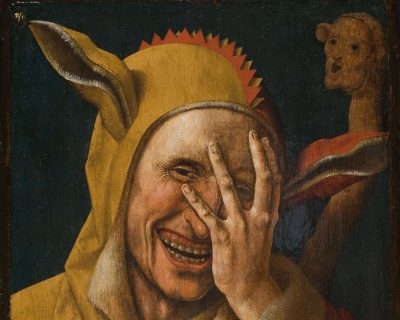
The story of the Spiritualist Movement in nineteenth-century America does not begin on All Hallows’ Eve, as one might hope. Instead, it begins on the eve of April Fool’s Day, March 31, 1848. On that fateful evening in March, adolescent sisters Margaretta (Maggie) and Catherine (Kate) Fox, ages 14 and 11, claimed to hear rappings—on the floor, at the table, on the wall—of intelligent communications from the spirit of a peddler thought to have been murdered in their family’s home in Hydesville, New York. Rather than dismissing what might easily have been explained away as a dalliance of youth, curiosity grew. Maggie and Kate attracted the attention of neighbors, the town of Hydesville, and—after relocating to Rochester, New York, to live with their older sister Leah Fox Fish—the interest of notable Quaker Abolitionists and reformers Amy Kriby Post and her husband Isaac. Leah, who quickly became her sisters’ performance manager, solicited that fateful meeting with the Posts, who were not only grieving parents, but also prominent members of Rochester society. The Posts’ attention all but solidified the young mediums’ fame, tied the movement to social reform, and helped to bolster its popularity, garnering a reported 11 million followers by 1870.
With the help of the Posts, the Fox sisters’ first public appearance at Rochester’s Corinthian Hall in 1849 was career-launching. It was also inextricably linked to the history of reform. For Issac Post selected the same venue wherein he and Amy organized lectures of notable Abolitionists like Frederick Douglass. Douglass not only frequently lectured there, but it was the site of his famed address “What, to the Slave, is the Fourth of July?” (1852). By 1850 the Fox sisters, along with Leah, relocated to New York City as resident mediums to convene a years’ long series of séances. Maggie and Kate met astonishing success, communicating with the dead through their “spiritual telegraph,” as it had been called, from beyond the veil. Attendees at these séances included city notables like New York Tribune editor Horace Greeley and famed novelist James Fenimore Cooper, as well as prominent reformers such as women’s rights leader Elizabeth Cady Stanton, author Harriet Beecher Stowe, and prominent Abolitionists Frederick Douglass, Sojourner Truth, and William Lloyd Garrison.
Although Greeley had recurrently highlighted the Fox sisters’ seances in the Tribune, Garrison strategically featured the sisters’ communication with recently-deceased Abolitionists in The Liberator. On March 8, 1854, he reported the Fox sisters’ communication with Jesse Hutchison and Isaac Hopper, delightedly recounting the song and wisdom of the spirits and of Hopper firmly rapped out the message: “Spiritualism will work miracles in the cause of reform.” Although he was initially skeptical of the movement, Garrison’s 1854 account concludes with “conviction” that “invisible spirits, not of this mundane sphere, performed the phenomenon” that he had witnessed that evening. Arguably, given The Liberator’s importance, Garrison’s conversion solidified Spiritualism’s potential to reincarnate and amplify the voices of the most ardent Abolitionists of the past. Indeed, it was not long before Ben Franklin—and after his execution in 1859, John Brown—were favorite séance spirits.
Like Abolitionists, women’s rights leaders, found affinity with Spiritualism. As Anne Braude argues in Radical Spirits: Spiritualism and Women’s Rights in Nineteenth Century America (1989), Spiritualism not only “affirmed…women’s spiritual prowess,” but “became a major—if not the major—vehicle for the spread of woman’s rights in mid-century America.” In fact, when Elizabeth Cady Stanton delivered her inaugural address at the nation’s first women’s rights convention at Seneca Falls, New York (a scant twenty-five miles from the Fox sisters’ Hydesville home), she delivered it to many Spiritualists. Though Stanton makes no claims to mediumship, her speech about women’s degradation draws on numinous rhetoric. She argues that “man cannot fulfill his destiny alone, he cannot redeem his race unaided” and that “the world has never yet seen a truly great and virtuous nation, because in the degradation of woman the very fountains of life are poisoned at their source.” Stanton’s rhetorical savvy links both destiny and redemption to women’s political freedom. In a conflation of sovereignty and salvation, Stanton argues that men’s debasement of women maintains the nation’s fallen state, religiopolitical rhetoric that seems especially apt in a Wesleyan chapel, in New York’s Burned-over District where the Convention was held. Braude further suggests that Spiritualism, or, perhaps spirits, may have further guided Stanton’s approach. She explains “raps” were not only “reported at Stanton’s home” but “reportedly rocked the same table where Lucretia Mott and Elizabeth Cady Stanton penned the ‘Declaration of Sentiments,’” entwining Spiritualism’s rhetoric with that of the women’s rights movement.
Yet, despite the shared religiopolitical rhetoric of these overlapping reform movements (Religious reform, Spiritualism, Abolition, Suffrage), our historiography misses a dimension of resistance that Spiritualism makes possible—a challenge to the contemporary white and male epistemologies ordering reality. In other words, Spiritualism demanded another way of understanding reality, another way of knowing. Guided by the radical spirits of the past (or, rather, practitioner’s interpretation of them), women’s prowess in the practice was, to critics of the movement, alarming. The involvement of radical Spiritualist women like Sojourner Truth, Victoria Woodhull, and Harriet E. Wilson in the movement showcased their belief that communicating with the dead was a sort of ideological third space—and that there was potential in using that belief to compel audiences to act in the causes of reform. Whether a practitioner was led by sincere other-worldly calling, political cunning, or a mixture of both, Spiritualists’ produced another way of knowing and their compelling interpretations were the specter haunting the epistemology of the era.
Spiritualism offered a means of knowledge-making that functioned outside of the known epistemic order, making its embrace by such a large portion of the population a potential threat to the status quo. In fact, the movement would lead William James to co-found the American Society for Psychical Research in 1884 to properly study “unclassified residuum,” believing that study of such phenomena as trances and apparitions would revolutionize science. Yet, before James (and Spiritualism), Transcendentalist and essayist Ralph Waldo Emerson would aver in “The Over-Soul” that “the philosophy of six thousand years has not searched the chambers and magazines of the soul,” concluding that in the “experiments there has always remained […] a residuum it could not resolve.” Though James had both an intellectual and personal connection to Emerson (James’s godfather), James does not link his use of residuum to Emerson’s. However, it seems too curious to evade mention, especially when both essays position practices of Spiritualism as a counterpoint to contemporary epistemologies: science and philosophy. Emerson even suggests that trances throughout history in their “varying forms of that shudder of awe and delight” are moments in “which the individual soul […] mingles with the universal soul,” to impart knowledge, a sort of spiritual Wi-Fi predating the Fox sisters’ spiritual telegraph.
However, as Brittney C. Cooper aptly puts it in Beyond Respectability: The Intellectual Thought of Race Women (2017), “American knowledge production was not a race- or gender-neutral endeavor.” Centering thinkers like William James and Ralph Waldo Emerson occludes the intellectual contribution of early Black political and religious thinkers like Maria Stewart. Stewart was the first Black woman Garrison published in The Liberator, positioning her work as formative within the Boston Abolition movement. Stewart was also the first Black woman to address integrated crowds of both sexes, lecturing on women’s receptivity to divine communication and her political agency within the work of interpretation. In her “Farewell Address to her Friends in the City of Boston” delivered September 21, 1833, Stewart observes: the fact “that the Deity more readily communicates himself to women, has at one time or other prevailed in every quarter of the earth.” But rather than seeing the condition exclusively as a mark of the divine, Stewart interprets the idea rhetorically, suggesting that it grew popular in contemporary epistemology precisely to dismiss women’s political agency. Stewart supposes that ascribing women’s knowledge or intellect to ‘divine receptivity’ was epistemically easier than recognizing a “sagacity common to the sex” that gave them “advantages […] over rough and simple warriors.”
Yet Stewart also resistswoman’s pedestalled entrapment as passive conduits of the divine. She concludes that “the religious spirit which has animated women in all ages […] has made them, by turns, martyrs, apostles, warriors, and concluded in making them divines and scholars.” By ending with “divines and scholars” Stewart not only speaks to her own role in the public sphere as a religious essayist and antislavery lecturer, but also speaks to the intellectual agency of the woman scholar. In this way Stewart nearly forecasts the emergence of the radical Spiritualist—that is, a woman canny to the movement’s rhetorical potential and who harnesses the “unclassified residuum” to assert a broader space for herself in the public sphere.
Sojourner Truth, a public figure in religious reform, Spiritualism, Abolition, and Suffrage, is a canny witness to (and rhetorical strategist within) them all. Though she would embrace the Spiritualist movement by the late 1850s, Truth’s response to the first séance she attended in 1851, after moving to Rochester to stay with the Posts, reveals her skepticism. As Nell Irvin Painter characterizes it in her definitive biography, Truth “made fun of the proceedings.” She reacted in astonishment to the spirits’ inefficiency of communicating with the Fox sisters by knocking and, conscious of her own formidable stage persona among the Abolitionists surrounding her, played a disruptive role in the séances she attended with Amy Post throughout the 1850s. As Painter recounts, Truth reportedly interjected at one séance: “come spirit, hop up here on the table and see if you can’t make a louder noise.” While Truth’s disruptions—her interjections and crouching to listen at the floor—may seem largely innocent, her early skepticism may have stemmed from a desire to protect her comrades in reform. Having already fallen prey to the Prophet Matthias, Truth may have worried that, like she was, others could be misled by a powerful rhetorical appeal, whether from a religious zealot, or from a notable figure “speaking” from beyond the grave. Truth’s initial response to Spiritualism, signals the dual nature of mediumship— it could work a miracle in the cause of reform or become the deviltry of a nefarious actor.
Other notable reformers, like Victoria Woodhull and her sister Tennessee Claflin, knew the exploitative power of Spiritualism from a young age. As archivist Susannah Broyles explains, Victoria’s and Tennessee’s “father was a one-eyed snake oil salesman and their mother a religious fanatic,” so “the girls were soon part of their father’s schemes, earning money as child mediums, healers, and clairvoyants at tent revivals.” This early experience gave Woodhull and Claflin an understanding of the movement’s rhetorical power, which both women used to advocate for suffrage, free love, and socialism. Their newspaper, Woodhull & Claflin’s Weekly—one of the first American newspapers helmed by women—also became the first paper in America to publish an English translation of Marx and Engel’s The Communist Manifesto on December 30, 1871, the same year Woodhull became President of the American Association of Spiritualists (AAS). In her closing address at the AAS in 1872, after her first year as President, Woodhull harnessed the ‘residuum’s’ power by beginning her speech with a “vision.” Through this framing device she argued that “woman’s social equality” and “industrial equity, must form the central power of all future reformatory movements.” Regardless of the means through which Woodhull received her “vision,” her goal was clear: she sought a new epistemology of reform. Despite their exposure to a profane industry of Spiritualism—of men exploiting young women and clients for their financial gain–Woodhull and Claflin found a way to become the divines and scholars that Maria Stewart “prophesied,” harnessing the power of the ‘residuum’ spirit world to advance social reform.
However, it is perhaps Harriet E. Wilson’s experience as a trace medium that reveals both the potential and limitation of Spiritualism’s rhetorical power to work miracles in race reform. Wilson, one of the few known Black mediums of the period, was also the author of the largely autobiographical Our Nig (1859), still widely considered the first novel published by an African American woman in the United States. Like the Posts and many other parents in mourning, she may have been drawn to Spiritualism in the 1860s shortly after the death of her seven-year-old son, George Mason Wilson. Indeed, during and just after the Civil War when the loss of life was so palpable in the nation, the ability to communicate with the dead became a salve for the nation’s soul, reaching its highest ranks. Mary Todd Lincoln, after the death of her son Willie, hosted séances in the White House Red Room, drawing comfort from mediums and spirit photographers. However, while Mary and Wilson were drawn to Spiritualism because of their grief, Wilson, as “the Colored Medium,” found power in her trances to challenge the role of colored women in the movement and beyond. As a resident medium in Boston, lecturer at Camp meetings, and administrator of a Spiritualist school (even running her own for a time), Wilson never lost site of the sharp critique of white Northerners and Southerners with which she ends Our Nig. She writes:
[As Fredo] …passed into the various towns of the State she lived in, then into Massachusetts. Strange were some of her adventures. Watched by kidnappers, maltreated by professed abolitionists, who didn’t want slaves at the South, nor niggers in their own houses, North. Faugh! to lodge one; to eat with one; to admit one through the front door; to sit next one; awful!
Through Fredo’s experience, Wilson’s criticism of the white reformers is a sobering reminder of even their resistance to social equality, an experience that persisted in her work as a medium.
Wilson publicly acknowledged her “grievances at the treatment she received from Boston Spiritualists.” Given Wilson’s shrewd critiques of white Northerners in Our Nig, R.J. Ellis and Henry Louis Gates surmise that Wilson’s “grievances” were rooted in her experience of anti-Black racism—even among the most radical circles of reform. Although her popularity waned over time and she ended her career problematically channeling Native American “spirit guides,” at the peak of her career as a medium Wilson’s trance performances still held influence. Spiritualist paper The Banner of Light reports that when she was entranced to speak as the spirit of her deceased Black father, her performance was both “interesting and instructive.” Though the content of her performance is lost to time, channeling the gravitas of a deceased elder Black man strongly suggest she offered an entranced lecture as a “race wo/man,” aligned with the integrated Spiritualist schools she led. If, in effect, Wilson harnessed the spirits of that Great Over-Soul and “retrieved” through the residuum wisdom from deceased Black men, whether enslaved or free, her Spiritualist work was at least briefly intervening in the race epistemology of Spiritualists in the present.
Though Spiritualism persisted into the twentieth century in the United States, its character changed dramatically. The movement faced increasing scrutiny by the 1880s and, as Braude observes, women’s leadership was overtaken by the leadership of men. The final blow to the movement came from Reuben Briggs Davenport’s 1888 publication of “The Death-Blow to Spiritualism, wherein the Fox sisters reveal their rapping was a hoax of “juvenile mischief-maker[s].” Though Maggie would recant her confession in 1891, the damage was done, and trust for women’s leadership eroded as well. By the century’s end it was clear that a trance medium would not be the medium of social change, a stark reality Sojourner Truth seemed to know about the work of reform all along. Yet the early years of Spiritualism cannot be discounted; they did much to spread the fire of reform by uniting movements and amplifying radical voices of change—even those of the dead—among the living.
Coda: To offer an eerie consolation for those who sought an essay more aligned with the spirit of the season: in 1904 a skeleton, presumed to be that of a peddler, was indeed unearthed in the wall of the Fox sisters’ Hydesville home. While the article was published in the Boston Journal, it is, quite fittingly, reprinted in ardent Spiritualist Sir Arthur Conan Doyle’s The History of Spiritualism, Volume 1 (1926).