


I was emailing with a life insurance broker about an interview for a freelance assignment when he asked me whether Russia was a safe destination for LGBTQ+ travelers.
“There are places in the world I would love to see but I am concerned for the safety of me and anyone I may be traveling with,” he wrote. “Some of my bucket list places that I think are questionable would be Egypt, Dubai, India, and Russia (when there isn’t a war going on).”
His question conjured up a scene from Beyond Gay: The Politics of Pride, a 2009 documentary. After months of planning in secret, Russian LGBTQ+ activists are holding a Pride March in Moscow. Everyone is dressed in casual clothes. There’s no rainbow flair or sparkle, just a few signs advocating for LGBTQ+ equality and the iconic onion domes of Moscow’s Red Square in the distance. Counter protestors show up, chant slurs, and throw eggs.
The scene is uncomfortable but familiar. What queer person hasn’t been harassed on the street?
The throng of counter protestors grows larger. Someone throws a punch. A marcher is down on the ground, bleeding. Others join in, kicking and beating him. Police arrive. I’m thinking the police are there to break up the fight, but they stand around and watch as the beatings grow increasingly violent. I’ve never been able to forget the image of that bloody Pride march gone wrong.
“I wouldn’t go to Russia,” I wrote back to the life insurance broker, referencing the documentary.
I haven’t been everywhere…but as the saying goes, it’s on my list. People often ask me if they should visit a specific destination. When they’re queer, they usually ask if they’ll be safe there. Most of the time, the answer isn’t as cut-and-dry as the one I gave the insurance broker.
LGBTQ+ people travel more often than the general population, and we spend more money on vacation. Despite our love of travel, the industry doesn’t always love us back. LGBTQ-specific travel advice is often reduced to the question of safety, which suggests there are places where we will be safe and places where we are vulnerable.
The truth is more complicated.
I’m white and grew up outside Boston in a 99 percent white suburb. While I looked like everyone else, I never fit in. I blamed my difference on my shy disposition, or the fact that I preferred to sit and read, or my naturally aloof resting face, or my status as a latchkey child of divorce living in a suburb of two-parent homes. As a teenager, I discovered my queerness. It was the answer to why I’d always felt like an outsider looking in.
But “queer” was an insult at the conservative private high school I’d been sent to after nearly flunking seventh grade. So rather than come out, I pretended to be straight. I denied my queerness when anyone asked and spent the next two years having guy crushes I was “too shy” to do anything about. I was attracted to guys. Yet with girls, the attraction was magnetic, urgent in a way that thrilled and scared me.
I stayed closeted until college, when I got my first girlfriend and promptly came out as bisexual. Like many queer people, the labels I used changed as I got to know myself better and the LGBTQ+ community developed more terms to describe our unique identities and preferences. By the time I returned to Boston for graduate school, I was solidly in the lesbian camp. I was even looking forward to exploring my hometown as my full self.
Boston’s queer community was small and intimate. I entered a lesbian-owned coffee shop and discovered the gay barista pulling shots was none other than the quiet, ginger-haired first violinist from my middle-school orchestra. Learning that I’d never been the only one, as I’d feared, was life-affirming.
But greater Boston was just as homophobic as I remembered from high school. Tenants who subleased my apartment wrote “fuck you” and “fag” on the wall when they moved out. While walking from my apartment to the T station, I was harassed by a Jeep full of guys who yelled “dyke” out the window. They laughed as they roared down the hill. Their insult took me back to high school, when another group of guys yelled the same slur as I sat on a stoop in Harvard Square, sipping black coffee with peppermint syrup. Back then, I’d been thrilled; their insult meant they’d seen a part of me I couldn’t show the world. As an adult, street harassment made me hypervigilant.
Massachusetts was the first state to legalize same-sex marriage, in 2004. While my home state enjoys a reputation for being LGBTQ-friendly, it isn’t an easy place to be queer. According to a Fenway Health study from 2018, nearly two-thirds of Massachusetts’ transgender population said they’d been publicly harassed, as I had. Poverty, unstable employment, and food insecurity are common stressors for the state’s queer and trans residents of color, who face additional hurdles to equality and wellbeing.
I have only ever lived in states with legal protections for LGBTQ+ people: California, Massachusetts, and New York. “Good laws,” such as those preventing employment and housing discrimination based on sexuality and gender presentation, make day-to-day existence as a queer person easier, but they do not predict safety. For myself and other queer people, home is sometimes the place we feel the least safe.
The list-based approach to LGBTQ+ travel suggests that picking the right destination will keep us safe. However, it doesn’t teach us how to prepare for harassment or defuse an incident if our assumption of safety is later proven wrong. It doesn’t encourage us to ask for better treatment or meaningful displays of allyship from locals, lodging staff, or tour providers.
Queer travelers can take actions to avoid unwanted attention and minimize risk, but homophobia and transphobia happen to us wherever we go. Anti-LGBTQ+ bias exists in “unsafe” countries with poor track records on LGBTQ+ rights and in “safe” countries with all the right laws. Homophobia happens in our schools and homes.
If the list-based approach doesn’t work because safety cannot be guaranteed, how should LGBTQ+ people decide where to travel?
Let’s start with a risk assessment, which that life insurance broker would appreciate. Queer travelers fall into two broad camps: risk-averse and risk-taking. Risk-averse travelers need to consider their safety first and foremost—for example, families traveling with children, including the heterosexual parents of trans, queer, and nonbinary youth who are now grappling with the way a child’s orientation or gender identity impacts family travel.
Transgender people are at risk for discrimination in healthcare settings, so they may take a cautious approach to travel, wary of the reception at a local clinic if they become sick or injured while traveling, even if needed care has nothing to do with their identity. Rising transphobia in many parts of the world means that even something as simple as using the restroom is fraught for anyone who doesn’t present as masculine or feminine enough, despite the fact that gender norms are culturally-dependent and fluid, not fixed.
Risk-taking travelers, on the other hand, don’t let their identity hold them back from a bucket list trip. These include experienced travelers seeking new horizons and budget travelers willing to rough it for a cheap holiday. Or they may be solo travelers, friend groups, or couples without kids to consider.
Usually, risk-takers have money at their disposal, which always greases the wheels. For example, with enough money, same-sex parents with a transgender child can fly to the Maldives, which in 2022 sentenced three local men to prison for same-sex activity. They can pay for an escort through a private immigration line with a “welcoming and understanding” officer who asks no uncomfortable questions. They can buy transit to a private resort that hosts symbolic same-sex weddings (illegal in Maldives) and looks the other way when travelers drink alcohol (also illegal).
Maldives is permissive with LGBTQ+ tourists because they have to be; tourism comprises close to thirty percent of the nation’s GDP. In my experience, people tend to be more tolerant of tourists’ behaviors when tourism is vital to their country’s economic health. This leads to a double standard: countries with discriminatory laws enforce harsh penalties for local LGBTQ+ people and look the other way for tourists, who can act as they please without (much) worry of harm.
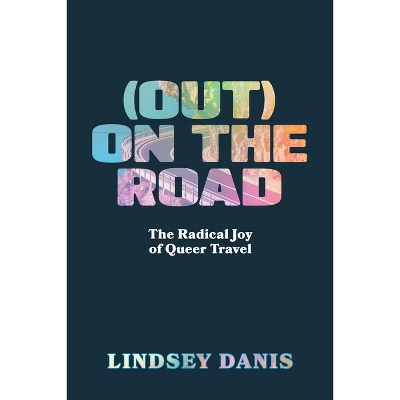
Reprinted with permission from (Out) On the Road: The Radical Joy of Queer Travel by Lindsey Danis, published in © 2026 by Ig Publishing. All rights reserved.


