

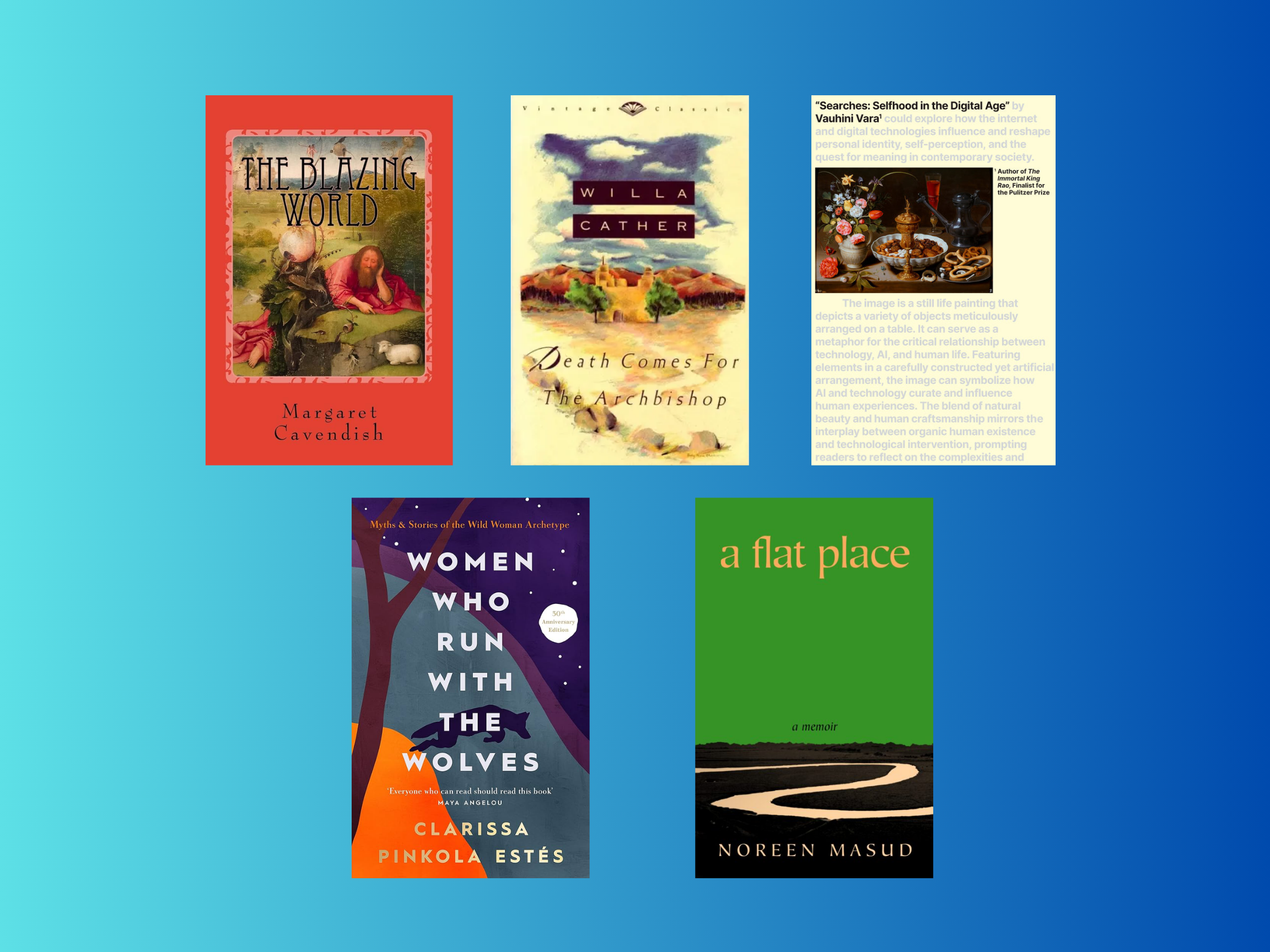
Shanzeh Afzal, Managing Editor: One of my favorite books of all time is A Flat Place by Noreen Masud. I remember starting to read it at the passport office back in Karachi, where you have to wait in line for hours until they finally call you for your turn.
What I loved most about this book was how the author talks about her life in Lahore before she moved to the United Kingdom. There was something so specific about her experience: living in a small apartment, sharing a space with her sisters, her complicated relationship with language that she reflects upon even years after leaving the country. What was her relationship to vast, flat landscapes when her whole life she has lived in cramped, loud shared spaces? How does she make sense of her childhood and sense of self when her early life has been so interconnected with her family?
This book is about these questions, and more (and less) and I can attempt to describe it with all the words I have in my arsenal. But the only way to learn what a special and beautiful piece of writing this book is, is to read it. I will always be recommending A Flat Place.
Sarah Steinberg, Associate Editor for Essays: Sinclair Lewis once called Willa Cather “Nebraska’s foremost citizen,” yet she was born in Virginia and few remember her transformative decade in Pittsburgh, where she honed her craft as both writer and teacher. I was first introduced to her through the Carnegie Mellon Press short story collection that celebrates those Pittsburgh years, set in the city’s own neighborhoods; places where Cather developed the keen observational eye that would define her career. After leaving Pittsburgh for New York City, Cather went on to win the Pulitzer Prize for Fiction in 1923 for “One of Ours”, cementing her place among America’s greatest novelists.
Willa’s nomadic life and writing style intrigued me. I retold this to my dad and, being a New Mexican that now resides in Pittsburgh, he suggested I read her 1927 novel Death Comes for the Archbishop. I’m loving it so far! The book tells a story of varying religious and community relationships in this New World territory where Cather herself did some exploring in the 1910s and 1920s. It is touching to see my home state through the lens of an outsider and fall in love with the land of enchantment all over again.
Asia Thompson, Associate Editor for Interviews: I plan to read Clarissa Estés Women Who Run With the Wolves over the summer. This past year has been full of moments of reflection and redirection, and I’ve been meaning to read more works that contain more reflection about not just being a woman in society, but also to reconnect with a part of ourselves that has been lost in the chaos of maintaining stability. I’ve been recommending this book for some time and I’m excited to put aside some time to read it.
Christopher Schaberg, Columnist: Over the past week I have been devouring AND CAN BARELY PUT DOWN Vauhini Vara’s Searches: Selfhood in the Digital Age, which has been blowing my mind and inspiring me to think and write in new ways. I’ve been kind of spinning my wheels for a few years on a book I’ve been (slowly) working on, and Searches has jolted me out of my stupor. I’m now thinking about my book in fresh ways, while reading about Vara’s own writing journey as it unfolds in earnest collaboration with AI. This is a stunning book that I would love to discuss with my graduate students right now; in fact, I might just assign it to them as a last-minute additional reading for our independent study this semester (sorry, Sarah and Matt!).
Ed Simon, Editor-in-Chief: In the necessary scholarly, critical, pedagogical, and most of all moral task of identifying women writers from the past who could be potential claimants of being figurative “Shakespeare’s Sisters” – to borrow the phrase from Virginia Woolf’s A Room of One’s Own – scholars of the early modern period have been particularly assiduous in resuscitating the works of long forgotten writers. While in the wider culture certain names, masculine names, are those that endure – Marlowe, Milton, Shakespeare – the past generation of academics have rediscovered and promoted the writing of women too-long ignored only because they were women. The translator and poet Mary Sidney, playwright Mary Carey, the radical poet Amelia Lanier, and the first genuine novelist in English Aphra Behn. Among the most fascinating of women to write in the seventeenth-century was an aristocrat named Margaret Cavendish, fantastically wealthy and supremely brilliant, who can lay claim to having invented science fiction and fantasy as filtered through her own cracked and incandescent brilliance in her 1666 phantasmagoria The Blazing World.
Cavendish’s novel is, it must be said at the outset, a supremely strange book. A roman a clef protagonist from a kingdom that sounds very much like England undertakes an arctic expedition that ends up killing all of her compatriots, while she journeys through a portal into a utopian parallel dimension. There, this “Margaret,” meets a motley crew of bizarre beings that include “Bear-men,” “Ape-men,” and “Ant-men,” who exist in a shimmering and luminescent world. Margaret, after a series of detailed scientific and philosophical introspections and dialogues, becomes monarch of this realm and launches her own defensive invasion in the “real” world.
Generically, The Blazing World combines the utopian and the satirical as mediated through the contemplative and the wondrous with the entire work framed by the metafictional, where the parallel dimension she discovers is in many ways the novel itself. For Cavendish, books were “paper bodies,” beings that had their own version of sentience and consciousness, and if she was denied political agency in our world (even as she also had tremendous privilege), then in writing, a different manner of being could be imagined. “Rather than not be Mistress of a World,” writes Cavendish, “since Fortune and the Fates would give me none, I have made One of my own.” No doubt it’s anachronistic to claim Cavendish as a feminist, and yet the example of The Blazing World gestures beyond itself to that utopian dimension where true justice and equity must and will be possible.


