Has there been a more promising first year of any literary magazine? Ed Simon and team have given a gift to everyone looking for vibrant literary community and refuge from doomsayers who say people don’t read. People do! Even after college! The discernment and debates are better, a few years out. Pittsburgh already had books and infrastructure: new independent bookstores, the Greater Pittsburgh Festival of Books (2022), the International Poetry Forum back from the dead (2024).
A Review of Books is a civic achievement for Pittsburgh. New York launched theirs in 1963; London in 1979; Los Angeles in 2011; Chicago in 2016; Cleveland in 2018. I note the genre is moving inland. Accordingly, PRoB spent its first summer running a Non-Beach Read Club on Gertrude Stein’s The Making of Americans, 925 pages. This is a big lift! If anyone can finish it, Pittsburgh can
I note Stein was born in Allegheny City in 1874. Pittsburgh annexed Allegheny City in 1907. It seems Pittsburgh acquires its writers the way it acquires everything: patiently, and then completely. The mission, per Simon: introduce Pittsburgh writers to the world, and world writers to Pittsburgh.
The PRoB, published by Carnegie Mellon’s English department, is the first Review of Books birthed in academia. The acronym means tackling problems and evaluating probabilities. I love that the regular columns are called The Foundry, Studiolo, Third Person Limited, and Object Lessons Impressions. It’s a steel mill + Renaissance masthead. Probably this is the correct ratio for Pittsburgh
What a first year: an Annette Gordon-Reed excerpt. Fatimah Asghar and Willy Vlautin interviewed. Essays on Gombrowicz, on Ruskin, on the inner lives of mangroves. A review of Quantum Theatre’s Tempest at the Carrie Blast Furnaces, a dead steel mill. My favorite piece: “The Inner Lives of Mangroves,” an excerpt from Sophie Gee’s The Barbarous Feast: Eating and Writing in the Eighteenth-Century World (Princeton UP, 2026), about the idea that places think.
The PRoB has arrived at the perfect time, just as newspaper book sections are disappearing and readers want something more than AI algorithms and spam stars. Thoughtful, interesting, reviews and essays and poems. A revitalizing spa for the mind.
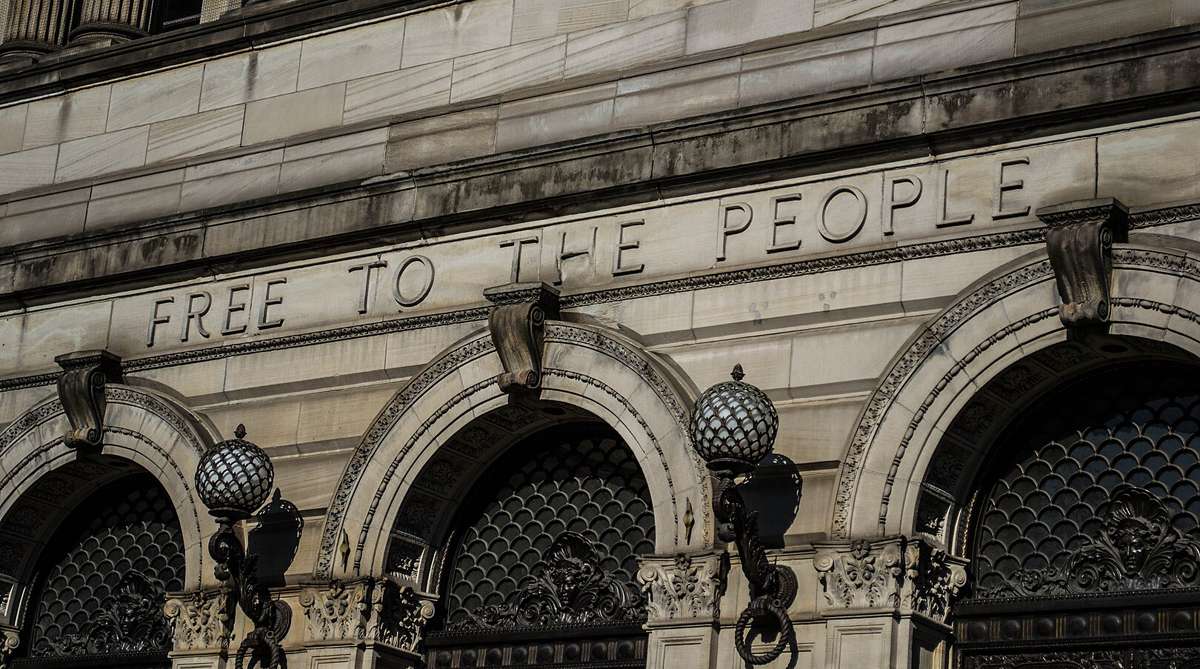
I note that over the entrance of the Carnegie Library, these words were carved in 1895: FREE TO THE PEOPLE. Pittsburgh is home to free reading for the people. Happy first birthday PRoB!