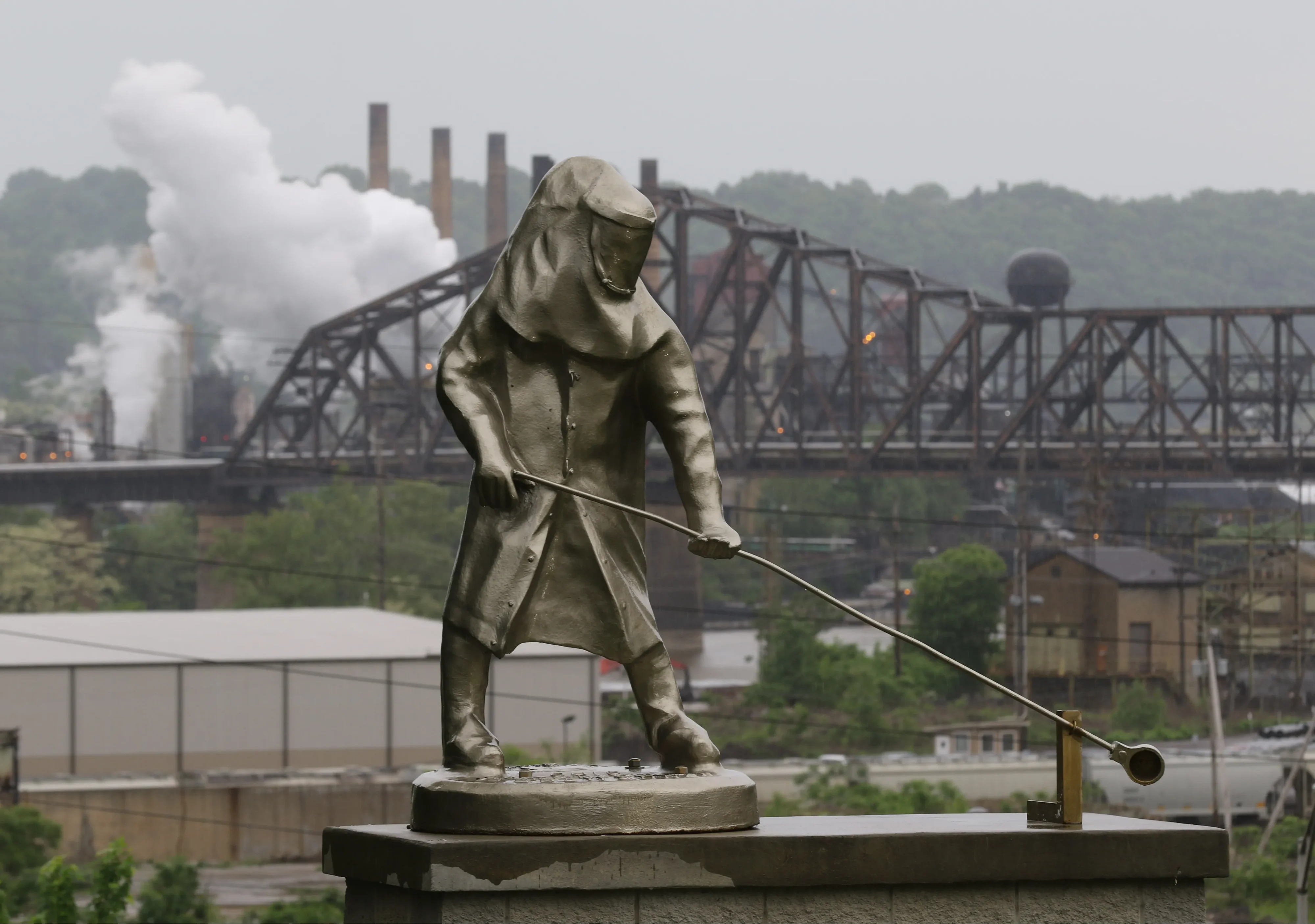
For generations, the literature most readily identified as Appalachian has come from the region’s central and southern mountains. While those voices have produced an extraordinarily rich tradition, their prominence has sometimes obscured literary work being produced in the northern part of the region, a world shaped by river cities, steel mills, glass factories, union halls, company coal towns, ethnic neighborhoods, and communities resting uneasily at the confluence of the Appalachian Mountains and the Rust Belt. But thanks to efforts our region’s writers, the northern landscape is becoming increasingly visible in contemporary literature.
Since its founding in 2018, the Writers Association of Northern Appalachia (WANA) has played an important role in helping writers to find both opportunities to get out their work and community with each other. In this tradition our 2026 conference in Wheeling, West Virginia, aims to encourage growing that body of creative work and to foster community. The gathering, being held in Wheeling Park’s White Palace, will bring together writers, readers, teachers, publishers, and literary organizations from across the region for two days of conversations about craft, publishing, place, and the writing life.
This year’s keynote speaker, Amy Jo Burns, is an especially fitting representative of the moment. A native of western Pennsylvania, Burns has built a body of work rooted in the communities and landscapes of Northern Appalachia. Her newest novel, Wait for Me, returns to that territory, drawing upon the region’s music, family histories, and complicated attachments to home. Her debut novel, Shiner, was an NPR Best Book of 2020. Like much of the strongest contemporary Appalachian writing, Burns’s work does not treat place as decorative scenery. Place becomes an active force; something that forms people, limits them, sustains them, and calls them back. Thanks to a generous grant from the West Virginia Humanities Council Burns’s keynote speech and book signing are free and open to the public.
The conference’s more than thirty sessions selected by our proposal committee, led by Jody DiPerna, likewise demonstrate the breadth of the region’s literary interests. Sessions include generative writing workshops offering opportunities to write as witnesses, learn techniques for revision, put words together about food and tell the important stories of our ancestors. Panelists will examine Appalachian stereotypes, environmental writing, public storytelling, literary citizenship, publishing, writing communities, and the practical realities of sustaining a creative life. An environmental writing track will take participants beyond the traditional conference room and into Wheeling Park’s autumn landscape, using its lake, shelters, and wooded grounds as spaces for observation and composition. Both the renowned Hindman Settlement School and Pittsburgh’s own Madwomen in the Attic program (housed at Pittsburgh’s Carlow University) will also hold collage readings.
Kicking things off on Friday night, the WANA will commemorate forty years of Bottom Dog Press, the eastern Ohio-based independent publisher founded by Larry Smith. A special reading at Esoterica in downtown Wheeling will celebrate the press’s long commitment to working-class Appalachian voices. Celebrating this anniversary acknowledges literary movements do not emerge through writers alone. They depend upon the presses, journals, editors, bookstores, teachers, libraries, reading series, and community organizations willing to build a home for work that larger cultural institutions have often overlooked.
Those networks are expanding. Publications such as Appalachian Lit, WANA’s flagship literary journal, have created additional space for regional voices. Independent and university presses are publishing writers who complicate inherited ideas about Appalachian identity. Contemporary books increasingly explore queer Appalachia, Black Appalachian history, environmental loss, deindustrialization, disability, immigration, gender, and the experiences of communities that do not fit comfortably within the region’s most marketable images. A reading from authors published in Appalachian Lit will take place on Saturday. More information about WANA and our 2026 conference is available here.