Two daft ideas seem to have already warped our understanding of this weeks’ electoral earthquake. On the one hand, the mainstream commentariat keeps saying that Trump “squandered” the multi-racial coalition he assembled in 2024 by making big mistakes, ”unforced errors,” and so on, as if he were the rationally calculating leader of a social movement rather than its elemental, excremental extrusion, and as if he hadn’t run on a program of mass deportation, lawless retribution, brutal misogyny, open racism, and reckless, unconstitutional use of presidential powers through executive orders.
He didn’t break any promises—his war on Iran is the necessary corollary of his ironclad commitment to Israel’s right to exist as an armed camp, as it must be if it is to remain the dominant ethno-nationalist state in the Middle East. (And now even this commitment has acquired an expiration date.)
On the other hand, the same commentariat keeps saying that the ascendant Democrats will have to decide between the moderates and the progressives in their Congressional delegations, as if the moderates, a.k.a. the existing leadership (Schumer, Jeffries) plus the ardent Zionists, have been forceful critics of or effective constraints on Trump.
Or as if the center of political gravity hasn’t shifted to the left since 2010—an ideological movement accelerated by the Covid interregnum—so that by now talk of taxing the rich to fund Medicare for All, to subsidize childcare, to renovate public education, to spend on affordable housing, to ease the transition to renewable energy, and more generally to make necessary goods affordable, occupies the vital center of political discourse, not the fringes.
This election finally demonstrates that the American people aren’t polarized. Polling since the Great Recession has consistently shown that they’re increasingly united around a more or less social-democratic program that, compared to the radical extremes of the Trump regime—from arming untrained ICE agents to prey on immigrants in blue cities to making the federal government a shareholder in private enterprises and a determinant of educational curricula—does seem quite moderate. But it is, in fact, progressive. At least it has had an articulate, programmatic form since Bernie Sanders came close to the nomination in 2016 and 2020 because he ran on it.
This form matters, because it gives progressives an advantage over the so-called moderates, who keep exclaiming that they have a plan to make things affordable, but never offer anything more than gestures toward restoring the cuts to SNAP and Medicaid made in Trump’s Big Beautiful Bill. They have nothing more to offer, it is clear, because to go beyond restoring the statu quo ante is to acknowledge that moving to the middle now means moving to the left—where the voters are but where the donors and the leadership don’t want the party to go. In any case they can’t imagine how to get there.
That said, the commentariat is also plainly wrong in reducing the revolt against Trump to the electorate’s focus on the economics of affordability. That reduction to “it’s the economy, stupid” ignores two silent but salient features of the revolt. One is the resistance to the moral depravity and criminal impunity embodied by ICE and articulated by Stephen Miller, and, in another key, by the president’s arbitrary imposition of tariffs, his threats to the sovereignty of allied nations, and his resolute affiliation with Vladimir Putin.
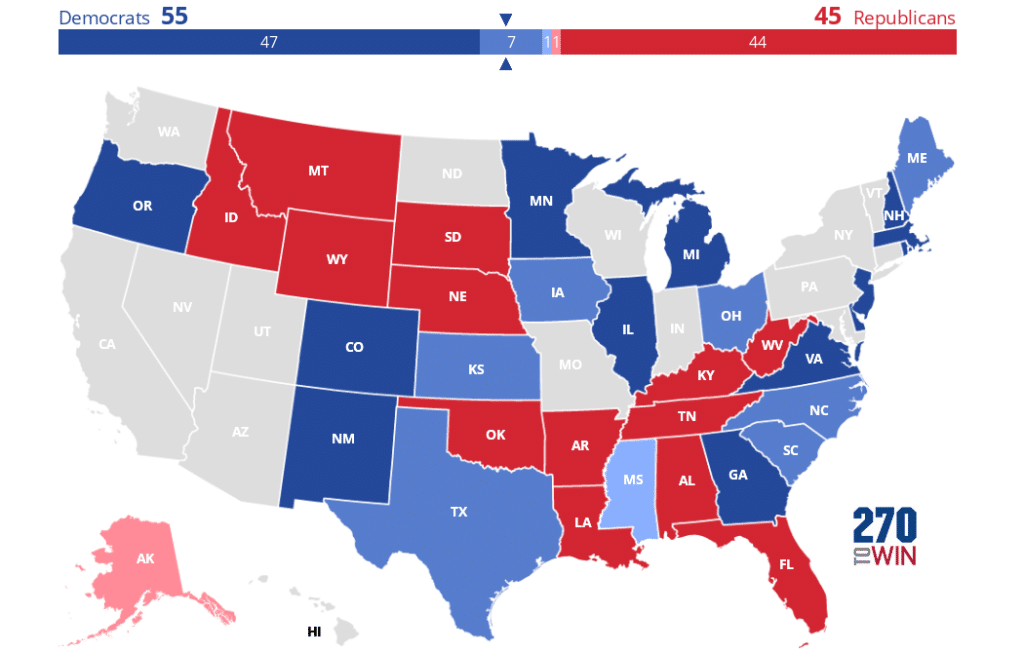
That resistance began in earnest last winter in Minneapolis, and was effective to the exact degree that, unlike the besieging forces—and as Eric Blanc has noted, unlike the recent demonstrations in France—it was orderly, non-violent, and ecumenical. The resistance reached the level of repudiation in the massive Hispanic vote for Talarico and Hinojosa as against Paxton, Abbott, et al. in Texas, which left Ted Cruz the last Republican standing in what was, until November 3, a red state.
The other silent but salient feature of the revolt against the Trump regime was the Black vote in the solid Republican South. Georgia, South Carolina, and Mississippi are now and hereafter in play because African-Americans rose to the occasion, in this case against the racial gerrymanders approved by a Supreme Court majority that mistakes the Constitution for a color-blind document that is somehow unscarred by slavery and indifferent to injustice.
An electorate desperate for adequate perceived choices on the issues it has a right to decide finally got them on November 3. It chose the possibility of democracy. The Democratic leadership is unlikely to follow through on this choice. But the American people have renewed their lease on the future of the republic.