I was scrolling the other day when my algorithm served me a clip of someone reacting to the musician SOPHIE. The listener puts on one of her more well-known tracks, “Lemonade” (some might remember it from a 2015 McDonald’s commercial), and upon hearing the otherworldly bubbling sounds that open the song, he immediately remarks “Ugh… that makes me feel so…”. He throws his hands up, sticks out his tongue, squints, shakes his head.
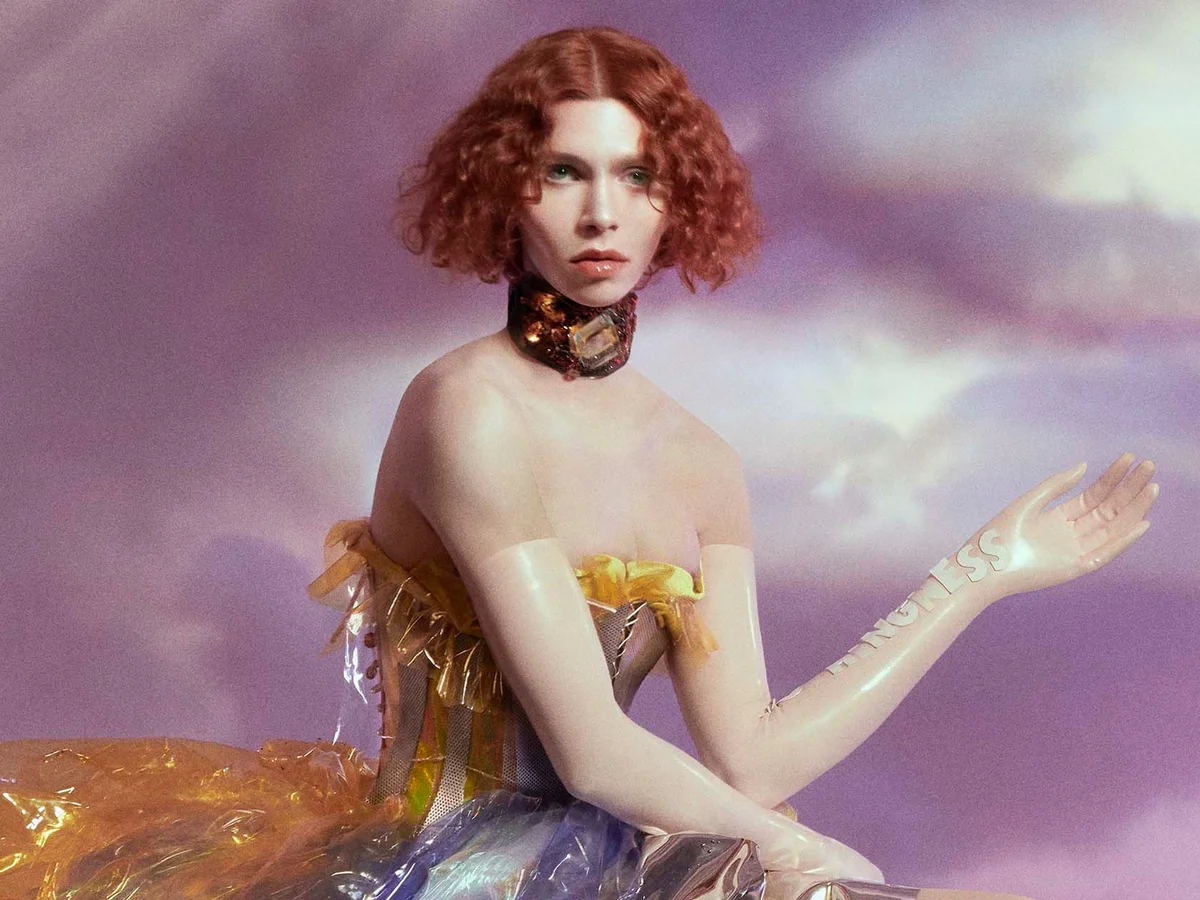
I felt like that too, when I first heard SOPHIE’s music. “Lemonade” bubbles and fizzes up your spine, then squeals and expands like balloons rubbing against one another, only to pop in some faraway recess of your skull. Like her all-caps moniker, her sound is brash and confrontational. One could call it electro-pop, but placing her in a single genre is near impossible. She’s often credited as a pioneer of “hyperpop,” the highly digitized, sensory-overload sound of zeitgeist-y artists like Ninajirachi, underscores, or Fcukers, and like these newer acts, her music draws upon tropes of early-2000s commercial pop like the Spice Girls or Britney Spears. But where a lesser artist might fall into pastiche, Sophie creates something entirely unique. Her uncompromising hands strip away any radio-friendly niceness, leaving behind only jagged edges, shiny surfaces, and earworm-y top lines. The music is dissonant and cacophonous, often atonal and purely textural. It can be disorienting at first, but once you learn its secrets, SOPHIE’s work is endlessly rewarding, full of sticky riffs and colors more vivid than anything you’ve heard before. To my annoyance, though, the reaction video I saw told a familiar story: every time I’ve played SOPHIE for friends, they’ve had the same response. I’ll make a lengthy disclaimer first: ”this is going to sound crazy, you might not like it at first, but just trust me,” but it hardly matters. A scoff, a sneer, sometimes a stuck out tongue. If they make it through more than 30 seconds, I’ll consider it a win.
I’ve noticed it with other artists too, across all sorts of genres, and have felt varying degrees of frustration trying to connect with friends over music that incorporates dissonance, noise, and other offputting atmospheres. The reaction I’ve observed so many times is a classic disgust response; an innate, primal revulsion responding to something that the brain perceives as threatening. Usually, humans are disgusted by sensory inputs we don’t like–tastes or smells that we might associate with bodily fluids, rot, death, or decay. We communicate that we are disgusted through that characteristic facial expression–curled lips, scrunched nose, a shake of the head. One can easily imagine trying to spit out something disgusting while making those same faces. Darwin describes this phenomenon in his work The Expression of the Emotions in Man and Animals, writing that “Disgust… refers to something revolting, primarily in relation to the sense of taste, as actually perceived or vividly imagined”. Unchecked, disgust can spill over into our feelings about all sorts of things, not just distasteful sensory experiences–Darwin claims that “extreme contempt, or as it is often called ‘loathing contempt’, hardly differs from disgust.” More than incidental feelings that come and go, disgust, contempt, and revulsion are key features of the human experience and a structuring force in our society.
Evidently, sound can be a source of disgust for those who are musically sensitive. I’ve noticed this before—certain dissonant sounds feel almost nauseous, or an uneasy rhythm can sound like an approaching hoard of insects or rats. Disgust is a common theme in art from every culture and through the entirety of recorded history. If you’re someone who enjoys horror movies (especially body horror), you’ve engaged with art that plays with our disgust response. If you’ve ever eaten fermented foods or drank alcohol, you’ve enjoyed something that intentionally activates disgust. When it’s contained and controlled, disgust can be attractive, like the thrill we get from the simulated danger of a roller coaster, and as a purveyor of dissonant and experimental art pop, noise rock, dance music and the like– I get the same thrill from art that demands patience and slow cultivation of your appetite before there’s true payoff.
Much of this music incites disgust at first. Sometimes it is found in an off-kilter vocal delivery or a body-horror lyric. I’ve followed the art pop musician Sudan Archives for a while now, and her most recent album features the song “Ms. Pacman,” a strange sort of speak-singing track where being in the right key is of no concern. The song isn’t about “sounding good”. It’s a thumb in the eye, a “Fuck you” to the haters and doubters. The harshness of Sudan’s vocals, after a couple acclimating listens, will work its way into your neural pathways, only driving the message of the song more. On FKA Twigs’ latest album Eusexua, the lyrics are as disquieting as the music; she sings of opening her sternum and shedding her skin, among other visceral concerns. One of my personal favorite musicians–Perfume Genius–has a song titled Ugly Season, where he sings of bodies “slick with rot” that’s “thick as vaseline.” Of course, there is much harsher music out there (try exploring the Death Grips discography, or tuning into the experimental outfit Mandy, Indiana). I’m most excited by gritty, in-your face production that makes you want to curl your lip. As an entry point, I might recommend an album like Charli XCX’s BRAT that revels in squelchy acid base and deadpan, “cringe”-core vocals. If you like that, you could try SOPHIE’s PRODUCT, an incredible collection of slippery, wet, visceral music–like a horror movie transmuted into some kind perverse pop anthem.
In a social species like our own, disgust is complicated by our fickle cultural rules. Socialization teaches us to feel a type of moral disgust, repulsion at behaviors we view as deviant or dangerous. Much has been written about moral disgust. There’s no consensus on whether it’s a helpful or harmful emotion–the best we can say is that “it depends.” Disgust can be a protector in a world full of potential dangers, but it is a conservative response in that it prefers safety over risk, and known over unknown. Most of the time, it’s more costly (biologically speaking) to engage with a potential vector of disease than to simply avoid it. Modern convenience spares us the need to expose ourselves to risky situations. So, disgust rules our routines. It guides what we choose to not eat, what we choose to not read or watch or even listen to, what we don’t look at, pay attention to, or take seriously. Disgust is powerful in this way. And, like all emotions, it can become tangled up in all sorts of political ideologies. Puritanical culture, since America’s colonial period, has leveraged disgust against the racial, sexual, cultural Other. It treats animals, wilderness, and the unknown as a threat to be feared and avoided. Morality crises abound, and deviance is generally punished, or at the very least, controlled so it can be marketed to. Born out of this moralization of disgust comes transphobia, xenophobia, ableism. Disgust is used to legitimate violently racist rhetoric–one needs not look further than the seemingly constant stream of conservative news headlines associating undocumented immigrants with murder, rape, abuse, and any other number of heinous crimes to see it happening in real time.
It seems to me that our ability to manage our disgust has some impact, small or large, on our openness to new experiences and our ability to challenge habituated judgements. I have always been encouraged, from a very young age, to try new things. Just as coffee, often bitter and unpalatable at first, can become a comforting daily ritual with a bit of practice, so too can art that feels “disgusting.” I like music as an entry point to “disgusting” art because of its low lift– it’s easy to press play on a song and see where it takes you. When I first discovered Sophie, I knew nothing about her. She kept her identity completely anonymous during her early successes, communicating only through cryptic emails. But her music, with its strange power, compelled me to learn her story. Sophie was transgender, and explicitly brought her identity into her art. On perhaps her most radio-friendly track, “Immaterial,” she declares, “Without my genes or my blood/without my name and with no type of story… I can be anything I want.” The chorus insists, marching unceasingly forward, “we’re just immaterial boys, immaterial girls.” Lyrically and sonically, her art speaks to transformation. She takes the raw elements of a pop song, deconstructs them, interrogates their meaning, and reformulates them into something completely different. This is the power of her work– forcing the listener to sit, patiently, and find beauty and power in art that is so uncompromisingly itself.
Sophie died in a tragic accident in 2021, only 34 years old. It was undoubtedly a massive loss for the queer community and for the future of pop music. But during her brief career, Sophie’s work opened incredible new potential for music to subvert, challenge, and transform conventions. Sophie, and the world of experimental music generally, taught me that sometimes you have to stick with sounds that are challenging and uncomfortable–when everything clicks into place, you can access hard-to-reach emotional spaces, and you’ll be more open to something shocking or “disgusting” the next time it confronts you.