Kindly forgive the late hour of this missive. I can only hope that this last-minute Hail Mary will meet its mark. Because until a few days ago, I thought I had lost forever my mother’s legacy. I searched all the usual places: my sock drawer, underneath the bed, in the junk drawer, in the basement, the attic, the boxes in the garage, edges frayed by invisible creatures.
At first, I thought I had merely misplaced it, shrugged it off, because I knew eventually it would show up. But I kept it a secret from siblings. As the years ticked by, its absence gnawed at me. History happened. And suddenly twenty years later, it felt like the future of the United States and the world depended on me finding it.
I was eight or nine when I first remember learning about my mother’s legacy, her brief moment of fame. It was the end of the sixties and our dinner table mirrored the decade in the rear-view mirror, it was the best of times, it was the worst of times, the dawn of the space age, Camelot, Beatlemania, the mini skirt, and free love juxtaposed to assassinations, political unrest, the endless Vietnam war.
My parents were young and smart and glamorous. People said she looked like Jaquelyn Kennedy, he like Tom Jones. They hosted elaborate gatherings, old panache with new money glitter, bridge parties, cocktails and cards with fancy hors d’oeuvres served on sterling silver trays and nuts and party mix in crystal bowls. My father, a boy from Cleveland, climbing the corporate ladder moved us from Ohio to an upscale New York City suburb in Connecticut. We rented a large five-bedroom house, mom fully entrenched in the feminine mystique, back then a problem with no name, today known as depression and overwhelming domestic malaise.
My father traveled, rubbed elbows with executives, flirted with celebrities while Mom stayed home ironing his dress shirts. The whoosh of steam, hot iron pressed to damp cotton releasing a starch scented cloud, a lipstick stained-cigarette dangling as she figured the finances in her head, calculated the impossible task of paying the bills despite a generous salary given my father’s over-the-top spending. My Mom, the former Thalia Hergenroeder, national debating champ, national essay contest winner, college educated, brilliant and beautiful had disappeared into Mrs. Stephen Slage. Mrs. Housewife.
We’d sit around the kitchen table at 6:00 pm sharp like a wholesome TV sitcom at our white Formica table, round with a pedestal base. The high-backed upholstered chairs. Vinyl. They swiveled with Captain Kirk authority, on the bridge with the sexy Lieutenant Uhura. Think mid-century modern, think Ikea with a Star Trek twist.
A tale of two tables, our family dinner time flipped from light to dark, a predictable coin toss, from a joyful variety show when my mother was at the helm to super charged high stakes family quiz bowl when my father was home.
I was lousy at meal time Olympics. I was careless with my attention. I would be day dreaming about the college quiz bowl we watched on weekend TV, the commercials with Santa sledding down a snowy mountain on a Norelco razor. I had no interest in current events, or history, the proper pronunciation for certain things, leaving plenty of opportunity for soul crushing humiliation for failing the pop quiz. Too busy in my head to finish my food and forced to sit at the table, sometimes for hours, sometimes until I fell asleep, to finish my plate. My sister and brothers doing their best to disappear my food while they cleaned the kitchen, grabbing a bite – a piece of whatever – meatloaf, hot dog, stuffing their cheeks like chipmunks – chewing vigorously, a handful of peas fed to Cleopatra (yes we named our disposal) or a visit to the bathroom – a glob of mashed potatoes flushed down the toilet.
My father fancied himself a chef so he did the cooking when he was home. A culinary scientist, trying this and that, he laced our meals with ingredients inappropriate for kids’ palates – the birthday bourbon cake, raw egg in soups, spaghetti sauce heavy with the lingering kiss of vodka.
When my father was out of town, dinner was joyful time. Part literary salon, table talk and recital. Mom was not a cook. She rotated five or six meals in and out – always with the same sides- they were edible, if unimaginative, nutritionally adequate, met all our daily requirements, the government approved upside down food pyramid. It was an eat what you want Smorgasbord. There were no clean plate police.
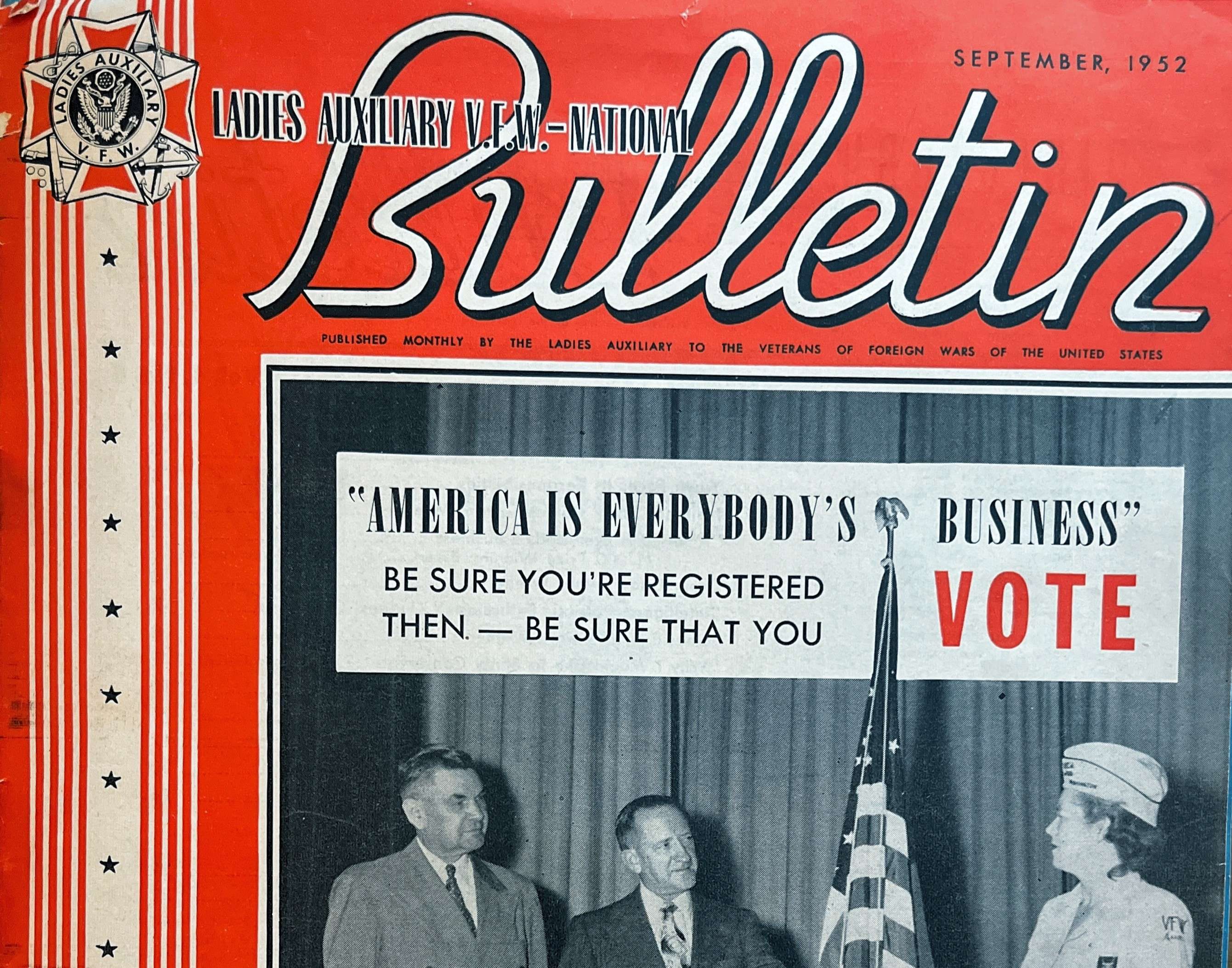
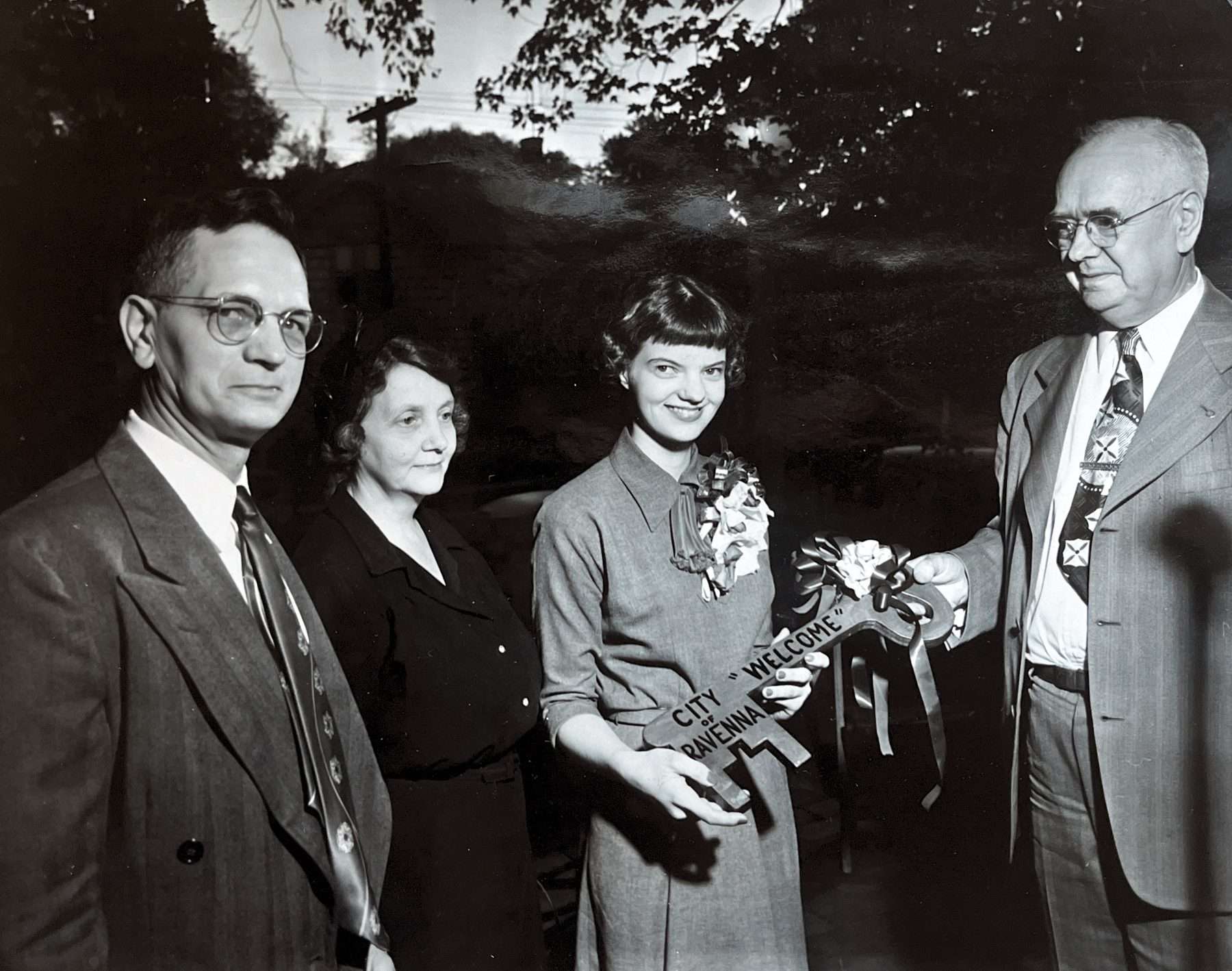
My sister and I performed duets. My brothers reenacted comedy routines: Cosby’s snakes under the bed and Cheech n Chong sketches. Mom read to us – the classics Old Yeller and Tom Sawyer and Moby Dick, excerpts from her high school and college diaries. And told us how she dreamed of becoming a lawyer, and about being a national debating champ. How she whipped up a new outfit each week for her meets because she loved fashion as much as she loved a good argument. She told us about the time the city of Ravenna proclaimed Thalia Day, held a parade in her honor. How the Mayor gave her a key to the city and the $1000.00 check (a princely sum in 1952) she received for winning National VFW essay contest. I didn’t know what the essay was about. But for this day-dreamy kid, the parade, the pageantry, the beautiful custom-designed outfits resonated in a way that alternating scenes of required perfection did not.
My mother’s moment of fame became family legend, the cornerstone, the illustration of what was possible, even while she struggled in the 70s as a single mom (friends this was a pejorative term back then – the weight of which we all felt intensely) abandoned not divorced – hamstrung by paternalistic laws and later entrenched practices that kept doors firmly shut, limited her financial resources, her ability to support her children in the wake of an absent father, a man who saddled her with debt and because she was still tethered to him made it impossible for her to get credit, get a mortgage. She suffered from migraines and took to long stretches in bed. Dinner time was no longer joyful.
Eventually, she climbed out her brokenness, her shell hardened. Slow to laugh and smile. She became the strong matriarch, the bulwark, the standard bearer upon which we all depended. She would become an award-winning interior designer and work until she was 70 and full of cancer.
When my mom died, nearly 20 years ago, I inherited the contents of her desk, the boxes of keepsakes that had traveled from Ohio to the East Coast and back, from house to house and apartment to apartment and eventually Pittsburgh. And I unearthed the cherished life-changing essay. The Voice of Democracy essay contest sponsored by the Veterans of Foreign Wars or VFW. How was it possible that I had never read it? Didn’t even know what it was about? But now it meant even more to me, because I missed my mom, desperate to know her in way that I had either long forgotten or was never allowed to see once she closed herself off – hardened by circumstance and her sheer will to survive her circumstances.
The original 1000-word essay, yellowed with age, typewritten, threads of paper crushed, indented by forceful passionate key strokes, her legacy, my promise for a future with possibilities headlined with the simple declarative statement “America is Everybody’s Business.” And underneath “by Thalia Hergenroeder.”
Her essay, in essence, was a call to action, to not take Democracy for granted. That continued freedom demanded civic responsibility. She urged Americans to embrace
the agency that was given to us by previous generations, preserved by the recent sacrifices by those who died for it. She urged Americans to serve on a jury or a city council, register for the draft, be well informed about the issues of the day, pay taxes and above all to vote.
I missed her so much, I was eager for her wisdom. Certain they would be elegant and sophisticated, I hungrily read her words. I’m sorry to say I was embarrassed by her by sentimental, folksy language, how she urged “Mrs. Housewife” to vote. Her shout out, “Say Mister” for failing to read beyond the funnies and the sports page. Her outdated use of masculine pronouns. For stating the obvious. In my mind at the time, there was nothing revolutionary or exceptional about her call to action. It seemed quaint, obvious. Disappointed, I photocopied and then tucked away, the original and the copy, somewhere safe. For safekeeping. And then promptly forgot where I put it. It was 2007.
And then 2016 happened and January 6th and the 2024 election. I looked everywhere for her essay. I didn’t dare admit to anyone that I had misplaced it. That I had lost our mother’s legacy.
Like the rest of the country, I had lost my way.
And then last week, while I was looking for something else, I found it. Twenty years after I dismissed her words, seventy-four years after she first penned them. I read them a new, with a tenderness that I didn’t possess twenty years ago. Because I have been rewinding history, unraveling my mother’s story, trying to understand my mom in context. That in 1952, she was seventeen years old, born during the depression, grew up during WWII, with the women’s right to vote, still tender and new. Fellow Ohioan, Gloria Steinem born in the same year as Mom, had not yet begun to lead a movement. I read her words, a new, hands shaking, because the last ten years have worn me down. Because I’m brittle now and fearful for the future. Because her lived experience in 1952, the problems then confronting the world, was not that different than mine in 2026.
In “America is Everybody’s Business”, Mom recalls Samuel Adams who initiated the Committees of Correspondence, an underground network of communication, letters disseminated to educate the colonists in opposition to a corrupt and tyrannical king. (Because of my own deeply flawed civics education, I had never heard of this) – a notion that would later be revived by Heather Cox Richardson in her daily Substack “Letters from an American.” Mom wrote about the dream of “freedom through democracy – the hope of the world,” the battles that Americans have fought to earn it and keep it. She warned against complacency:
“But have I been painting too rosy a picture, or conveying the idea that everything is perfect here? Condemn me, if I have, for false security is an ever present evil which we must guard against. There are forces that would destroy what we have built here. Ideologies of jealousy and greed reach out from all directions. The citizens of America must keep this nation strong—a bulwark which can hold back the surging evils without and crush the burrowing enemies within.”
“Therein lies the challenge of America. A duty not just to be fulfilled by the other guy or just by you and me. This challenge must be met by everyone if we are to preserve forever what is ours today.
We will succeed only when every American understands not his democratic privileges, but also his democratic responsibilities.”
Mom never mentions a political party. She mentions duty, the ability of every person to be heard and thus make a change, the mandate to vote.