Jury duty. Getting hit by a bus. Sidney Lumet’s 12 Angry Men.
These were some of the ingredients that were mashed together one particular week in New York City. Perhaps an unknown force of unknown physics had been organizing their convergence for months, or longer. Maybe it only seemed like a spontaneous explosion in my mind. Regardless of the mechanics, the waiting was over. Life’s purpose was suddenly rediscovered. Potential energy turned kinetic. That uncontrollable obsession was back—
Inspiration is a lot like love at first sight. There’s nothing you can do about it when it strikes. It completely takes over.
I was sitting at the bar of the West Bank Cafe in Manhattan one evening when Kathryn Erbe walked in. I had seen her in numerous films and TV shows throughout the years. She’s probably best known for playing Detective Alexandra Eames for ten seasons on Law & Order: Criminal Intent. She has this unique combination of sensitivity and strength that was perfect for the role of Juror #8 in my upcoming film The Plea. Coincidentally, that same afternoon, we had sent her agent an official offer for Kathryn to play that role. I had never met her. Never seen her in person. Never even talked to her. I was just sitting at the bar waiting to meet my wife for dinner. Then all of a sudden Kathryn was there.
The West Bank Cafe is a legendary theater hangout in Hell’s Kitchen on the edge of Broadway. It opened in 1978 on the ground floor of Manhattan Plaza, which is a federally subsidized residential complex explicitly designated for performing art workers. Most of the building’s tenants were actors, musicians, writers and stagehands, making the West Bank Cafe their de facto hangout. Over the decades, literary and theatrical legends like Tennessee Williams and Arthur Miller became regular fixtures at the bar. In its small basement theater Aaron Sorkin developed some of his first play ideas. Unknown struggling actors like Nathan Lane, Holly Hunter and Bruce Willis honed their craft on that stage. It was around the corner from my apartment. I liked its culinary consistency and the spontaneous conversations about art that would erupt around the bar. It was a safe haven and playground for an introverted writer like me whose primary socialization consisted of bars and restaurants.
Kathryn had stopped in the vestibule to answer her phone. Yes, I was spying on her at that point. Her phone conversation didn’t last long. Must have been good news. She was smiling. Our eyes met as the host led her to a table. She was giving back to me the same perplexed stare I was giving her. Damnit. I hate doing things like this, but I had to introduce myself. What were the odds of the actor I had just made an offer to that same day suddenly appearing at the restaurant where I was having dinner?
I think a lot about inspiration, the creative process, whatever you want to call it. Not too much, though. That can feel masturbatory. One of those things that as soon as you start examining it too much, you’re not in it anymore. Each time it strikes it feels a little different. This one felt like a wave. All I had to do was keep in rhythm with it. Not go too fast. Not go too slow. Go at its pace. Don’t force anything. Then everything would start to fall into place. Like seeing Kathryn at West Bank. The call she received in the vestibule was from her agent. It was regarding my movie.
From my vantage point at the bar I watched her officially accept the role of Juror #8. My wife shows up and, naturally, our table is right next to Kathryn’s. Of course, I assigned Magnolia-esque higher meaning to these “coincidences”. The air crackled. The movie gods were grinning. It meant we were going to make something special. Anything was possible.
Side note here, if you’d like to go Inside Baseball regarding the making of The Plea, The Industry has an interview with me and my co-writer/co-director Dean Imperial. Our producer Kim Jackson, also has a piece on IndieWire about the Alabama Supreme Court case that inspired The Plea and our mission to keep the film off streaming sites and available only in independent cinemas around the country. A clip of the film is available on both sites.
Kim Jackson and I had been following a court case in Alabama. Embryos at an IVF clinic had been destroyed. Accident or not wasn’t the point. The owners of the embryos wanted justice. Whether they were pro-choice or anti-choice they wanted accountability. There was no precedent for such a case. The legal infrastructure to bring criminal charges didn’t exist. A civil suit ensued instead. Then the judge threw it out. Another judge brought it back in appeals. This went on for a couple of years until February of 2024 when the Alabama Supreme Court ruled that embryos have the same rights as children under the state’s Wrongful Death of a Minor Act established in 1872. Now the concept of “Personhood” was being talked about. What constitutes being a person? Several fertility clinics across Alabama temporarily paused their services due to increased legal and liability concerns. The state swiftly passed a legislative exemption that temporarily stabilized the situation. All litigation was eventually dropped but a path forward had been cleared for a future framework regarding how embryos are classified and handled in the United States of America.
What does this mean for the future? Most likely, further regulation of women’s bodies and reproductive systems by the government. What would that look like? If embryos have the same rights as children does that mean a woman who had several embryos in stasis would be forced to carry all of them to term? Because otherwise the implication would be that she’s committing murder? Does that mean a future of government mandated birthing?
The second ingredient of inspiration for The Plea came from its co-writer, Scott Organ. “You do not want to be judged by a jury of your peers,” he said. I found that fascinating and worrisome. Why? In his most recent jury duty experience, many of the jurors acted from their own ideological bases rather than considering the particular facts of the case. I’m taking this straight from a scene in The Plea— “A jury of our peers, what a joke! We’ve got MAGA, liberals, he/she/they/them, blue collar, white collar, deplorables, coastal elites! I mean seriously. Who among us would actually hang out together outside this deliberation room? Seriously?! Who!?”
Most likely, not a single one of the jurors in The Plea would grab a beer together after the verdict. Out in the wild, they marinate in algorithmic echo chambers created and controlled by giant tech corporations, each scrolling through a doom-loop of negativity and confirmation bias. Social media? It’s a dopamine slot machine, rigged to reward outrage and keep us at each other’s throats. That’s why The Plea needed to bulldoze the usual tribal lines, confiscate every phone and glowing rectangle and lock everyone in a bland hotel with nothing but their own awkward silence. Then, and only then, are twelve strangers forced to confront each other’s humanity. It’s in that vacuum—no memes, no hashtags, no algorithmic handholding—that they remember what it’s like to be human, not just a collection of grievances. Turns out, we’re not natural-born enemies. Turns out, democracy depends on this messy collision of perspectives. This isn’t just a plot device, it’s the unvarnished heart of The Plea.
Regardless of the intent or inspiration, making a good film is only half the equation. Filmmaking is a business. Strip away all the adventure and romance and indie filmmaking is a blood sport in the age when anyone with a phone can shoot a movie. Filmmakers spend a lifetime dancing on quicksand, budgets so tight there’s no room for error, distribution hopes resting on the mood and taste of a gatekeeper and festivals that can feel more like lottery tickets than launchpads. If you’re one of the handful still scraping by, you already know the system’s rigged. For the rest, the one’s bleeding out at the distribution phase, it’s survival of the fittest. With streaming giants swallowing the market and squeezing indies out of anything resembling profit, the primary financial function of an indie film has become little more than a tax maneuver. Less than one percent of working filmmakers build a sustainable career from their craft, the rest bow out or dodge creditors, nurse side hustles and keep rolling Sisyphus’s boulder up the hill because they can’t imagine life without a meaningful creative purpose. Money and power huddle together at the top and the folks hustling on razor-thin margins? They’re vanishing. And that’s before the AI wolves even sniff the door.
The odds and chances of success are so small, and the time, energy and resources it takes to make a film are so great, it forces many of us, including me, to take a zealot’s approach. The harder it gets, the purer the impulse. At this end of the filmmaking spectrum, the only movie worth making is the one you can’t not make. The calculations and projections become obsolete, the only metric left is whether the film burns hot enough to justify the cost to your soul. That’s indie filmmaking.
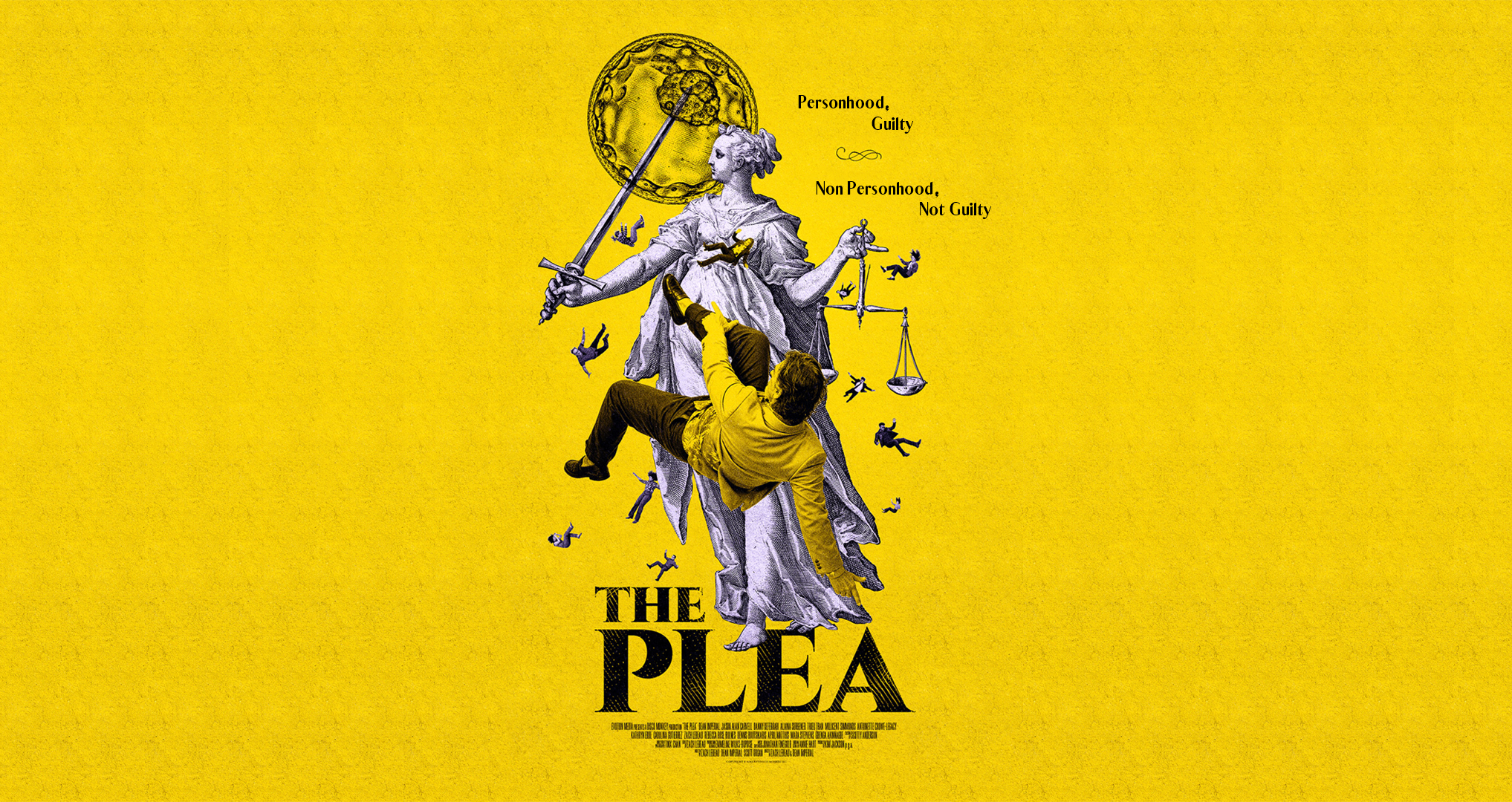
Shot in black and white, financed at a level where creative control was worth more than any “names” it might’ve lured, The Plea wasn’t made to disappear into the black hole of the streamingverse. It was made to get a very specific point across. It was made to be seen in theaters. After its festival run, it will be making a regional tour in independent cinemas around the country. There’s something sacred about a room full of strangers in the dark, all caught up in the same fiction, each seeing a slightly different movie. It’s an experience no algorithm can reliably reproduce. Going to the theaters is not nostalgia, it’s anthropology. Humans have always needed ritual, a reason to come together, a collective breath. Oh, and regarding the other two ingredients of inspiration I mentioned in the beginning? I guess you’ll have to see the movie?
The supporters of independent film in Pittsburgh can come see The Plea at the Lindsay Theater on Saturday, November 7 at 6P.M. as part of the Three Rivers Film Festival. Tickets can be purchased at Film Pittsburgh.