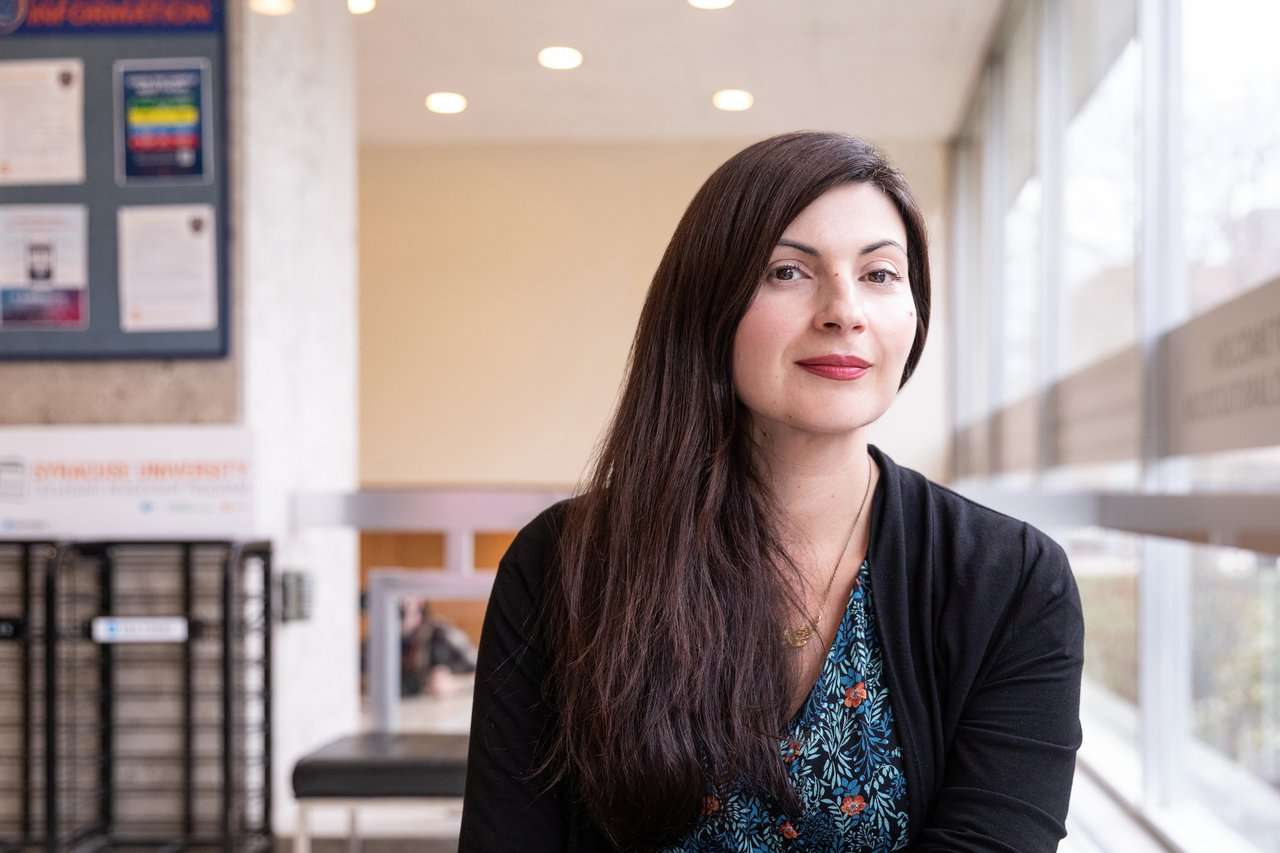
White Whale Bookstore is hosting bestselling author Mona Awad for an offsite event celebrating the paperback release of her novel We Love You, Bunny on Tuesday, September 15, 2026, at 7:00 PM at the First Unitarian Church in Shadyside, where she will be joined in conversation by local writer Clare Beams
“A satirist is a man profoundly revolted by the society in which he lives. His rage takes the form of wit, ridicule, mockery.” With apologies for the misogynistic assumption that satirists are always male, Gore Vidal’s 1962 comment from The New York Times Book Review is dead-on when considering the novels of Mona Awad. Her breakout best-seller Bunny, which has gained cult-like status since its publication in 2019, targets the ubiquitous Master of Fine Arts in Writing Programs offered by so many universities and colleges across the United States, the often-mocked elite graduate programs where young writers go to hone their craft. There’s plenty of wit in Bunny, plenty of rage in this novel. Rather than imagining a hyper-attenuated version of our real world, Awad steers her satire deep into a realm of horror and fantasy. Awad’s writing program like nowhere else.
Her protagonist is Samantha, a second-year fiction writer in a prestigious program which feels very much like Brown’s. She’s a loner, who deliberately sets herself apart from the clique of snobby rich girls in her workshop. These are the Bunnies. That’s how they call themselves, that’s how they act – like secretive creatures. Samantha is surprised to be invited to one of their secretive salons. They’ve never paid her much attention, and Samantha always assumed they didn’t like her. She’s abject about them, both as writers and as individuals. Granted it’s a bit difficult to see them as anything but a group of privileged and pretentious graduate students. When Samantha reluctantly attends one of their soirees, she is pushed down a rabbit hole as if she were Alice, she’s confronted and confused by the blurred lines between reality and the imaginary. Things start happening quickly as the two worlds collide. There are explosions and body parts – real and metaphysical (though mostly animals) – Awad is an expert in lagomorphic imagery. Partially an exploration on the toxicity of women, part a consideration of the creative process, and part a riff on the desperation of solitude, Bunny is the kind of novel that presents just as many questions as it answers. This open-ended uncertainty – what’s real and what’s not – allows the reader agency to imagine the outcome of the scenarios presented.
Now there’s a sequel. Awad returns to ‘Bunny-land’ in her newest novel We Love You Bunny. Now this is a real twist in the world of literary fiction. It’s rare for literary novels to have sequels as the character arcs are usually complete and the characters have found some sort of conclusion (even if it’s not a happily ever after). But Mona Awad told me that she had no intention of writing a sequel. That it was not something she had ever considered. “I thought I was completely done with this world,” she said. So much so that she went on to write two other novels – ones that had nothing to do with toxic female friendship, MFA programs, or rabbits. All’s Well, published in 2021, centers around a painkiller-addicted professor who believes that putting on Shakespeare’s play All’s Well That Ends Well, will solve her drug dependence problem. Two years later, Awad published Rouge, a dark, surrealistic horror novel that explores the collision of grief and the market driven world of beauty. A woman obsessed with skin care must deal with the complexities of life after the death of her mother.
So why return to Bunny?
“I had finished the novel years before. I had crafted these characters and these experiences, but I found that I missed the world. I really missed it all,” she said. Awad began to think again about the story of Bunny, of the characters’ motivations. She considered what she had produced and thought maybe there was more to tell. In the end, it was her readers who gave Awad permission to return to the book. Her fans were enthralled by the world Awad had created, by the characters, and their struggles. They were fascinated by the mysteries – the “not knowing” of the book. They liked the thin line between reality and fantasy, and they loved the way the book gave them agency to fill in the spaces that weren’t defined. They wanted more. So Awad went back – something that surprised her as much as it has been delighting her readers.
It’s not often one hears a writer using the word “fun” to describe her writing process, but Awad used it several times in our interview. “It was just so fun to go back and revisit this world. I loved returning to it.” Writers mostly lament the writing process. They present it as something that must be endured. Most writers like having finished projects – they certainly like completing novels. Few admit to enjoying the journey to get to the end. Most say it’s hard work. Awad stands in contrast. She enjoys the process. “I really loved being in this world.”
We Love You Bunny is not a retelling of the first. Nor is it a continuation exactly. Things have shifted dramatically from the first novel. Here, Samantha has just published her debut novel. She’s been on book tour. The book does well, gaining readers and critical admiration. Everyone seems to love what she has written. Does this sound at all familiar? Though Samantha is pleased with her reception, the Bunnies are not, as the characters based on them were dismissed by their author as evil creatures. Now the Bunnies want their revenge. Samantha is kidnapped – tied up – gagged. They are done listening to her story.
It’s the Bunnies turn now. Each of them has a say, with the chapters in the book rotating between them, each Bunny given a chance to describe how they perceived the events that Samantha took ownership of the first time around. “The shift in point of view was really fun. I got a chance to write from the villain’s point of view,” Awad says. “Several villains, in fact.”
In the first book, we’re locked inside Samanta’s head. We see the Bunnies as she sees them – pretentious and arrogant, and part of this clique. We never consider them as individuals. Now Awad has given them the opportunity to writer their own revenge story. “The Bunnies,” Awad says. “Have something to prove,” And she gives them plenty of space to retell the first story. Samantha stays silent. (The gag helps with that.)
Here the satire’s target shifts. Rather than the MFA program in Awad’s first novel, the target is now the creative process itself. It’s here where Awad works in the metafictional aspects of her novels. The narrative conceit of different characters speaking in different chapters allows the Bunnies to question how stories are determined. Everyone has their own side of the story. Snobbery and arrogance might be covers for social awkwardness, something Awad thinks both Samantha and the Bunnies struggle to hide from the world. We see the Bunnies not as a clique of jealous girls, but as women who have their own agenda, their own desires, their own take on what’s happening in their worlds.
Samantha, unable to have her say, is forced to listen the Bunnies give her their truths. These narratives are not at all similar to the one she wrote. The divide here is more between creation and truth as Awad plays on this metafictional plane as Samantha – the author – is forced to hear from her minor characters who are dissatisfied with their portrayals.
Bunny is being adapted to film, an ambitious undertaking given the fact that so much of the narrative takes place in Samantha’s head. The blurring of fantasy and reality A new medium might clarify the ambiguities about fiction and reality explored in the novel, but Awad is not worried about the potential result. The novel, she explains, exists on a plane of metaphors, which will translate well to the visual medium of film. “In writing we’re told that for a piece of fiction to be good you have to kill your darlings, and this happens inthe novel. The girls literally kill their darlings.” She believes the film will amplify the story.
As will the next book. Yes. A third! Awad is not sharing details, but she has written a second sequel. This one continues building the mysterious world created in the first two but expands certain elements and plot points. “This is the final novel,” Awad says. Those are the only hints she’s offering right now.
Maybe readers can convince her to spill more about the new book when she comes to Pittsburgh later this month.