I have a tricky question here, which I’m going to approach from an odd angle. What interests me is that modern and contemporary fiction seems to have swallowed the world whole: starting with Joyce, anything could go into a novel. Pynchon put in rocket science, Gaddis put in finance, and Richard Powers has put in dozens of sciences. This is an exhilarating and liberating period for fiction, because it seems the walls dividing fiction and other fields have broken down… except that they haven’t.
In all those examples, the engineering, chemistry, or biology are described, not literally included. Flatland conjures mathematical questions of higher dimensions. Even Cormack McCarthy only talks about quantum mechanics in Stella Maris. It’s true some fiction writers also write in full detail about science, but that happens in books that are separate from their fiction. Thus Hans Magnus Ensenzberger, David Foster Wallace, and Michèle Audin have all written nonfiction books on mathematics. But when science and mathematics are embedded in fiction, they are put into words, summarized, conjured. There are scattered equations in modern novels from Alfred Döblin to Yoko Ogawa, but those are either isolated lines of math or verbal approximations.
It may seem this is inevitable, because few readers can negotiate actual equations. But for me it’s a puzzle. There are many ways to introduce readers to actual science and mathematics, and many strategies to help readers understand equations. Given novelists’ desire to put the entire world into their books—a natural tendency, given the extremely complicated and fascinating world we live in—why stop short of actual science?
I’d like to approach this from an odd angle: a look at the French writer Michèle Audin, who was a mathematician and a novelist, and who tried to put the two together.
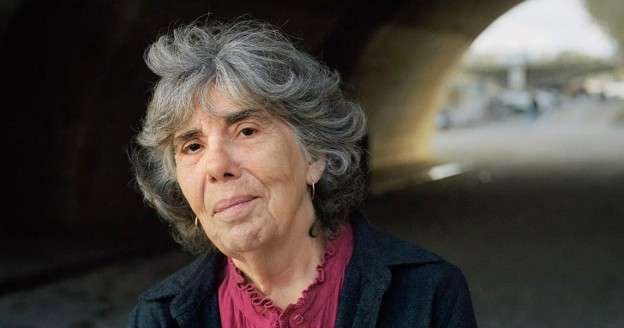
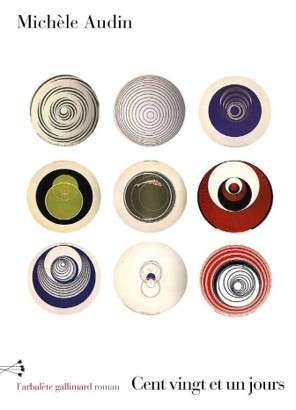
Her One Hundred Twenty-One Days is an experimental novel, the second in English by a female member of the literary group Oulipo. It’s about the lives of several French mathematicians. Given the many mathematical investments of Oulipo, and especially given the book’s subject matter, it’s disappointing there’s no actual mathematics in the book.
It seems that there’s an unwritten rule in literary fiction: a decorative equation or two is okay, but other than that it’s necessary to paraphrase, Scientific American style. Remain faithful to the facts, but don’t present the actual science or mathematics. It’s odd, if you think about it: it would be as if writers who wanted to mention Homer, Dostoevsky, or Proust had to insert bland, AI-style summaries of their books instead of quotations. Audin’s book is full of literary references, many of them quite precise. Nothing like that happens when she refers to mathematics. Why should even an intricate experimental text like One Hundred Twenty-One, written by a mathematician about mathematicians, omit mathematics?
Reading the book as politics and history
The novel is about the distance between the nominally unpolitical world of mathematics and the atrocities of both World Wars. Some of the mathematicians in the novel were in the resistance in WWII; others were collaborators; one was Jewish; another was horribly wounded in WWI. There are intrigues and politically motivated actions of various kinds, but the idea is that despite it all, people were still doing mathematics.
It’s possible to read this as a book about the identities and lives of people compromised by war. In France, Audin is known for refusing the Legion of Honor because, she said, Sarkozy failed to answer a letter she wrote asking for information about her own father’s disappearance (he was a well-known mathematician). A review by John Taylor in Boston’s Art Fusedescribes Audin’s novel along these lines, as a matter of politics and identities:
[Audin’s] spirited Oulipian gambits stand out and may irritate some readers. They keep the emotions from building up and making this novel thoroughly gripping. Feeling is in shards, as it were… a strong point is being made: what matters is not emotional connection, but rather gathering scattered bits of fact, piecing some of the puzzle back together, and restoring the identities and thus the full-blooded faces of those whom the Nazis sought to efface.
In this reading, the book is a conventional historical essay, and fiction only helps it along. From this perspective, it would be irrelevant to add the actual mathematics done by the people she names.
Reading the book as a puzzle
But it’s an Oulipo book, and that movement has always been full of rules and tricks, and it’s also possible to read the book as a puzzle. It’s divided into eleven Roman-numbered chapters, each of which takes a different form—diary, myth, dossier, chronology, and so forth. After chapter XI there is a “Supernumerary Chapter,” dated 2009-2013, in which Audin lists some of the book’s sources, including the Oulipean authors François Le Lionnais, Raymond Queneau, and, curiously, Georges Perec. She enumerates the chapters that include material from each source, but it is often impossible to say how the material appears in a given chapter. The “Supernumerary Chapter” also lists all the place names mentioned in the book, although it’s not clear how readers are supposed to make use of that information. The book ends with an “Index of Proper Names,” which are, mischievously, a mix of real and invented mathematicians.
In a brief afterward the translator, Christiana Hills mentions that she read most of the books mentioned in the “Supernumerary Chapter” and did extensive research on the geography, biography, and chronology of the book, but she doesn’t say how any of that helped her with the translation, or might affect the reader’s experience. It doesn’t help that she says two chapters, VII and X, were written using constraints, but doesn’t say how many more there might be, or if she thinks she found them all, or what the two she identifies mean, or how she translated their hidden rules (p. 170). All this turns One Hundred Twenty-One Days into a typical production of the Oulipo: it becomes a complex machine that’s difficult to know how to use.
This has led several readers to see the book as a puzzle. Here is Felix Hass, writing in Bookslut:
You cannot read Audin’s masterfully written book as you would any other work of fiction. Rather, you need to approach it as you might a book of science or mathematics. You underline, you comment, you take notes. In a mathematical proof, you might try to fill in a technical step that was left to the reader by the text itself. With One Hundred Twenty-One Days, you want to capture detail mentioned about seemingly unimportant characters, to serve as cross-references when they are broken out as heroes of a new chapter, which, on first glance, might strike you as an entirely new book…. So, at the end, it is not a man’s rebellion against or another man’s complacency with fascist oppression, nor is it a triple homicide committed by a third or the combined mathematical genius of all three that lends itself as the focal point of Audin’s novel. Rather, she wants us to see that it is a young woman’s love, her “121 days of happiness” which is truly remarkable, “the fabric of history.” Audin lets her fictitious author put this theory forward in one of her last pages and underlines it by her choice of title. Still, it remains difficult to see the importance of this love episode, which is laid out in merely one of her eleven chapters.
In The Complete Review Michael Orthofer hedges these issues. He says the book “can’t easily be reduced to a ‘story about’ some-(or many) things,” but those things are what interest him, and in the end the book is a “puzzle.”
In Hass’s and Orthofer’s reading the book becomes a puzzle with a solution that’s also a moral: the vicissitudes of history and politics are less important than a moment of love. Yet I don’t think either reviewer is entirely satisfied with their own reading.
Other reviewers have understood the book as a feat of hidden structures and rules, a political history, and also a report on mathematics. Karl Wolff ends his review in The New York Journal of Books by asking “What is storytelling, if not a futile grasp to interpret the accumulated detritus, ephemera, the junk of civilization?”—a question that is not specific to this book. According to John Russell Clark, in The Kenyon Review, “the novel’s implicit view of history” is that “it is vastly more complex than any single point-of-view, or any one narrative (or, shit, any fifty narratives, 121 narratives) could ever come close to grasping.” But again this doesn’t account for the book at hand: it could be said of any sufficiently complex book history.
A few reviewers saw Audin’s book as a novel about mathematics. Corine Tachtiris noted in World Literature Today that “with powerful effect, Audin demonstrates that math can be both poetic and political.” It’s not easy to understand how that could be true, and most of her review is about the history.
These and other responses suggest the book produces a sort of critical exhaustion, as readers search for love stories, politics, and history, and fail to find a focus. In these “vague regions” (“parages du vague”) as Mallarmé says, mathematics is lost.
Representing mathematics
It’s especially sad that Audin died in 2025, because I would have loved to know how she experienced her own book. The mathematicians she mentions would have been present in her mind in the form of their actual accomplishments: their theorems, their proofs. Some of that math would have been especially fresh in her mind because the mathematicians were included in Audin’s professional publications, like the one below. But all this would only be an enrichment for the author. For most readers, the content of the mathematicians’ minds is a blank.
One Hundred Twenty-One Days could have been so much stronger and stranger with some of the mathematics in it. Audin could have introduced some of the central results of Vito Volterra and other actual mathematicians she mentions, and she could easily have invented plausible (but fictional!) mathematics for the invented mathematicians like Mortsauf, Gorenstein, Kürtz, and Meyer. She would have been the perfect person to do it: not a math enthusiast like Wallace, but an actual mathematician and first female member of the most mathematically-inclined writer’s group that has ever existed.
A book as complex as this one, with a full range of Oulipean constrained writing, appropriated styles, multiple chronologies, and allusive prose, should be able to present mathematics. Instead we get hackneyed gestures in the direction of mathematical beauty. One character muses that pi is exquisitely beautiful. There’s a chapter on numbers that includes a dozen mathematical constants without explanation, and there are hints of “genius” throughout. As Adhemar Bultheel points out in his review, there are lots of numbers, some of which—like the exact distance of the Auschwitz death march—are “heavily loaded emotionally,” and others of which—like pi and other mathematical constants— “coldly measure data.”
Why should mathematics be reduced to those “Beautiful Mind” kinds of evocations? How much more compelling, historically engaging, and formally complex this novel would be if it had included some of the mathematics that is said to drive it. There are many ways to show the significance of constants like the square root of two, e, and pi, without introducing advanced mathematics or even trigonometry.
I am trying in my own work to bring mathematics and other sciences into fiction without paraphrasing them, without simplifying or popularizing, and without using numbers and equations as decoration. Five Strange Languagescontains graphs, charts, equations, sheet music, and many other non-literary elements, and all of them are legible to any reader. And why not? The world we live in is tremendously complex, and novels should be able to give us that entire world, not just the parts that go easily into words. Otherwise every reader who is also an engineer, scientist, or anyone else who actually uses mathematics, will only see blurred evocations of themselves.