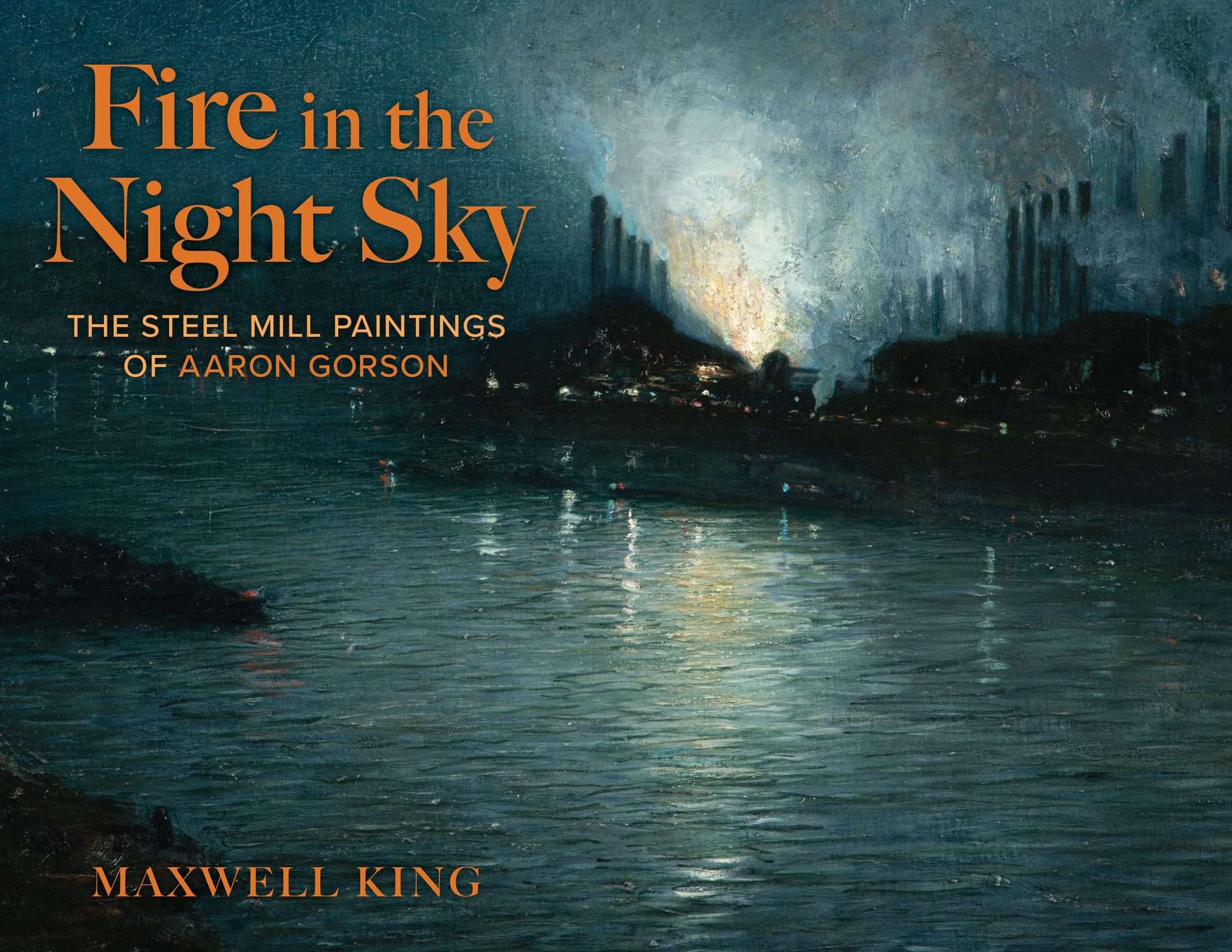
It was an unexpected turn of events that brought Aaron Gorson to Pittsburgh in 1903. As a struggling artist in Philadelphia, Gorson had gotten much-needed help from a patron, Rabbi J. Leonard Levy, who provided connections to potential clients and training for this young Lithuanian Jewish painter. But Levy suddenly left Philadelphia to become the spiritual leader of Rodef Shalom Congregation in Pittsburgh, leaving Aaron Gorson, barely able to make ends meet in Philadelphia, adrift. Finally, he decided to follow his patron to the smoky capital of industrial America.
And it was pure serendipity that led Gorson to fall in love with steel. In the early twentieth century, Pittsburgh was a world center of industry, focused primarily on the production of the widest imaginable array of metals and metal products. It had built an industry that dominated global output at a time when steel was changing civilization—much of what had been wooden or iron in the nineteenth century became steel in the twentieth, and most of the inventions of the new century relied on the alloy. Life on the streets of Pittsburgh was a twenty-four-hour-a-day tumult of shops, hotels, restaurants, bars, and arcades, fed by a population that was always just on the cusp of coming off or going on a shift at the mills. Thousands of people in the streets day and night, filling the restaurants and shops.
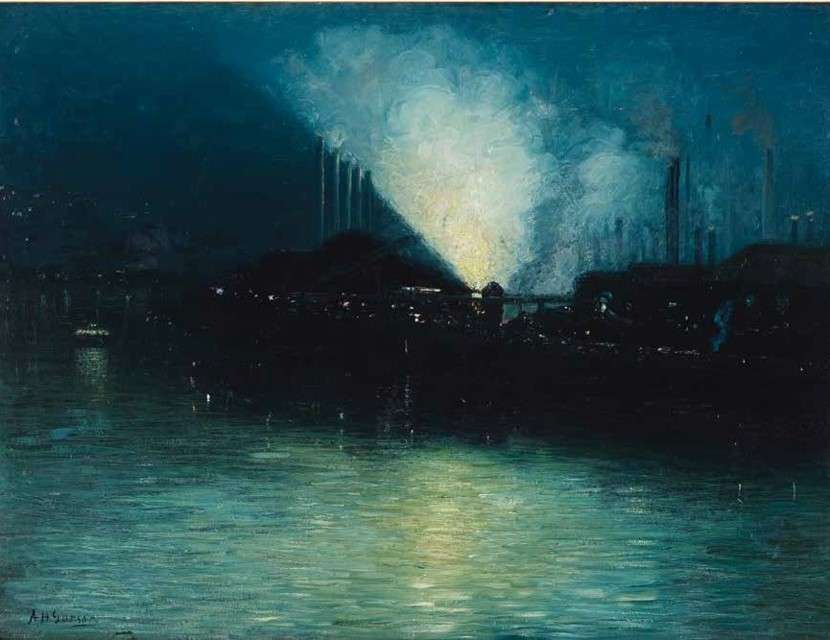
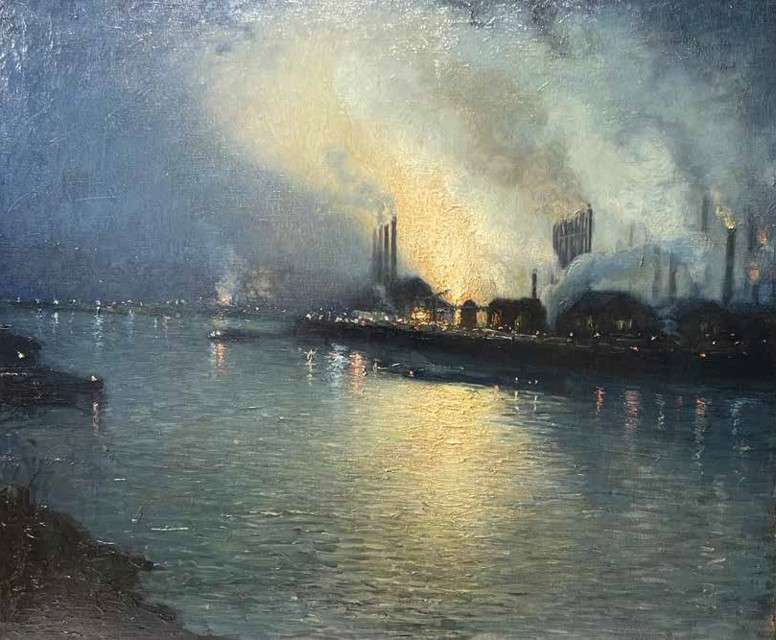
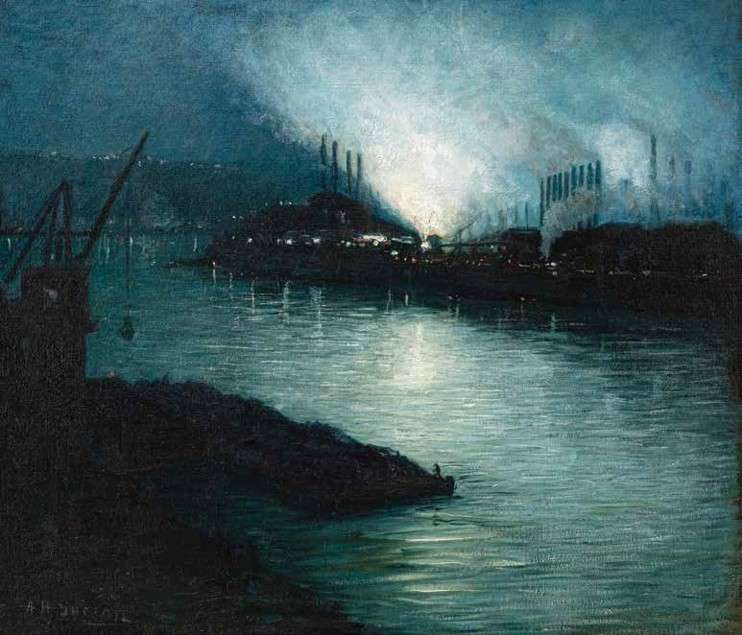
When Gorson wandered these streets as a new arrival, one of the places he encountered was a high hill behind the town proper. At night, the artist would find him-self on a bluff looking up the Monongahela River at the sprawling mills that lined both banks. And Aaron Harry Gorson was enchanted that night: Looking down on a fiery riverfront tempest, he was struck by the glory and power of steelmaking. The bright lights of the furnace fires and molten iron and steel in the massive indus-trial complexes along the river lit up the night sky and reflected brightly off the water.
Gorson, a student and admirer of the dark scenes in the work of American painter James McNeill Whistler, found his métier in his newly adopted city, America’s mecca of industry.
In a career that brought him renown and financial success, Gorson became the leading American artist of his time in depicting the extraordinary power of the steel industry. He created scores of paintings in which he used his distinctive skills to highlight the stunning sight of the bright mill fires in the darkened air, reflected on the river waters and in the sky over the hulking structures of the mill sites.
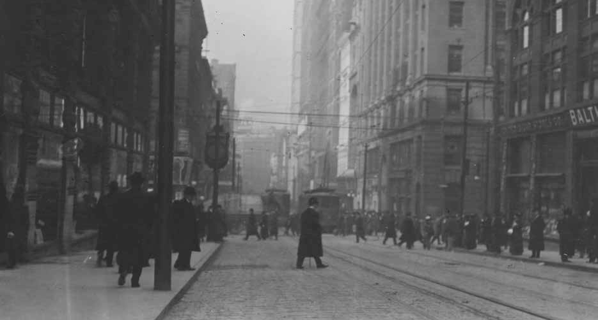
Gorson’s introduction to the spectacle of American steelmaking at night came at a place in Pittsburgh called Boyd’s Hill, now known as the Bluff and currently the site of the Duquesne University campus. Boyd’s Hill is also the spot where James Parton, writing for Atlantic Monthly in 1868, gave Pittsburgh the sobriquet that would stick with the city for the next century and a half: “hell with the lid taken off.” Parton, Gorson, and countless others were captivated by the glory and the power of Pittsburgh’s mills at night, a sight that stuns with its fiery beauty.
Art curator and historian Barbara L. Jones, writing in 2006 in Born of Fire: The Valley of Work, explained that “Gorson relies on heavy impasto (a thick buildup of paint on select positions on the canvas) to emphasize the fierceness of the fire, while using subtle color harmonies of blue, green, purple, and black to create the dramatic contrast between the dark night and reflections of light on the Monongahela River.” These skills eventually made him one of the greatest of American industrial artists.
Aaron Harry Gorson came to Pittsburgh at just the time that the river val-leys of southwestern Pennsylvania—the Allegheny, the Monongahela, and the Ohio—reached their apex as the leading industrial sites of their era. Pittsburgh was an extraordinarily exciting and intense place, a community where great fortunes were being made and workers from across America and Europe could come for ready jobs and steady incomes—albeit jobs that often came with bru-tally long hours and frightful conditions.
It was a place where human ingenuity and vision were rapidly changing the world with the mass production of products that made possible a stunning new civilization. So much of what we take for granted today—cars and trucks, tall buildings, railroads, bridges, steel ships, and airplanes, so many of the products in use in America and around the world—came out of this extraordi-narily inventive period during which Pittsburgh was at the forefront. It was a time unmatched until the era of Silicon Valley technical innovation a hundred years later. Steel became America’s greatest material in the earliest years of the twentieth century. And Aaron Gorson became the oracle of the blazing power of the mills that made the steel.
Excerpted from Fire in the Night Sky: The Steel Mill Paintings of Aaron Gerson. Copyright © 2025 by Maxwell King. Available from Lyons Press.