You don’t go into coalition because you just like it [but] because that’s the only way you can figure you can stay alive.
— Bernice Johnson Reagon
It’s ok to have imperfect allies.
— Zadie Smith
The widespread multiracial protests over George Floyd’s brutal murder by Minneapolis police in the summer of 2020 made Alice Echols, like many others, wonder why this particular tragedy triggered such a dramatic surge in activism? More puzzlingly, why did the movement then dissipate so quickly? To try to answer these questions, Echols, the author of important histories of radical second-wave feminism, the hippie counterculture, and 1970s disco, decided not to examine the recent past, but instead to go back to an earlier era of civil rights protest: the Black freedom struggle of the 1960s.
To turn back to the 1960s by way of questions about the more recent Black Lives Matter movement comes as a bit of a surprise. After all, BLM activists famously contended that their movement “was not your grandfather’s civil rights movement.” What Echols discovers, however, is that your grandfather’s civil rights movement was not your grandfather’s civil rights movement.
More crucially, her book aims to demonstrate that your grandparents’ Black Power movement was not what many assume: it was not merely a whites-out, Blacks-only affair. It contained many instances of cross-racial alliance and what would eventually be called “allyship.” Racial interactions could be fraught, of course, but they reveal not a simple story of an integrationist colorblind dream in the early 1960s undermined by a go-it-alone separatism by the late 1960s. This has been the dominant narrative of the African American civil rights struggle. As Julian Bond of SNCC (the Students Nonviolent Coordinating Committee) sardonically put it, the reductive formula became “Rosa sat down, Martin stood up, and the white kids came down and saved the day.” More recently, however, a new wave of scholarship flipped the script. Informed by the Black Studies imperative to foreground African American agency, scholars no longer repeated the rise-and-fall narrative of yore; now they told a kind of fall-and-rise tale in which the shift to Black Power and the pivot from a drive for national inclusion to a rhetoric of global anti-imperialism mattered most to the civil rights story.
This shift in academic perspective informed the Black Lives Matter movement itself to some extent. Echols views it as essential, but she believes it has also had the unfortunate effect of obscuring a messier yet equally necessary pursuit of interracial solidarity in the United States, one so threatening to the powerful that it required not only state repression, but also a fierce rightwing cultural attack in the guise of caustic accusations of “radical chic.” Long before “woke” became a term of derision, Echols explains, “radical chic” was doing the work of dividing and conquering a liberal-left, militant Black-supportive white coalition that might challenge the ongoing problems of American inequality and injustice. There was little room to build a sustainable movement for change.
This was not the case in the 1960s, Echols reveals, yet histories of activism during that era have tended to sweep Echols’ more complex, fraught history of Black-white, liberal-left civil rights alliances into the dustbin in order to tell a simpler tale: either one of rise-and-fall or a reversed narrative of fall-and-rise. The particles of the past, however, have a way of hanging in the air above the broom and pan, at least in the archives. They neither rise, nor fall. They just float there for us to study. Echols sees them and in Black Power, White Heat: From Solidarity Politics to Radical Chic she helps us glimpse the stories of many activists trying to figure out the difficult task of how to forge a mass movement despite differences of background and social position.
Echols’ book becomes less a study of action in the streets than a careful analysis of interaction in meetings, courts, and living rooms. We are not out on the march or at the microphone with charismatic leaders; the spotlight pivots to the background, where strategists of multiple identities tried to negotiate lines of difference in service of a shared goal: the end of Jim Crow racism in the US. What we learn, most of all, from Echols is that it is not accurate to separate Black from white after the turn to Black Power in the middle of the 1960s. Echols revisits the torturous moment when SNCC asked white members to leave and sees that below the decision, cross-racial organizing continued in new guises. Some were mistakes, in her judgment, blocking coalitions in the name of separatism, but other efforts actually found new and more powerful ways of continuing the struggle Black rights.
Even before the breakup of SNCC, Black-white interactions were more entwined than the superficial story Julian Bond lampooned of white kids saving the day by heading South to join Freedom Summer. The Mississippi Freedom Democratic Party in 1964, for instance, got their ideas of “parallel institutionalism”—the idea of building a kind of shadow Democratic Party delegation—from Ernst Borinski, a German Jewish survivor of the Holocaust who taught sociology at the historically Black Tougaloo College. Later, within SNCC, some of the most militant supporters of a Blacks-first model were white. They saw themselves as part of the movement for Black freedom, playing supportive roles and working together. One of the key figures working alongside famous Black SNCC activists such as Bob Moses and Ella Baker was SNCC’s first office secretary, the white Southerner Jane Stembridge. Another key figure in the office of COFO (the Council of Federated Organizations, which attempted to bring together various civil rights groups) was the Chicana activist Elizabeth “Betita” Sutherland Martínez.
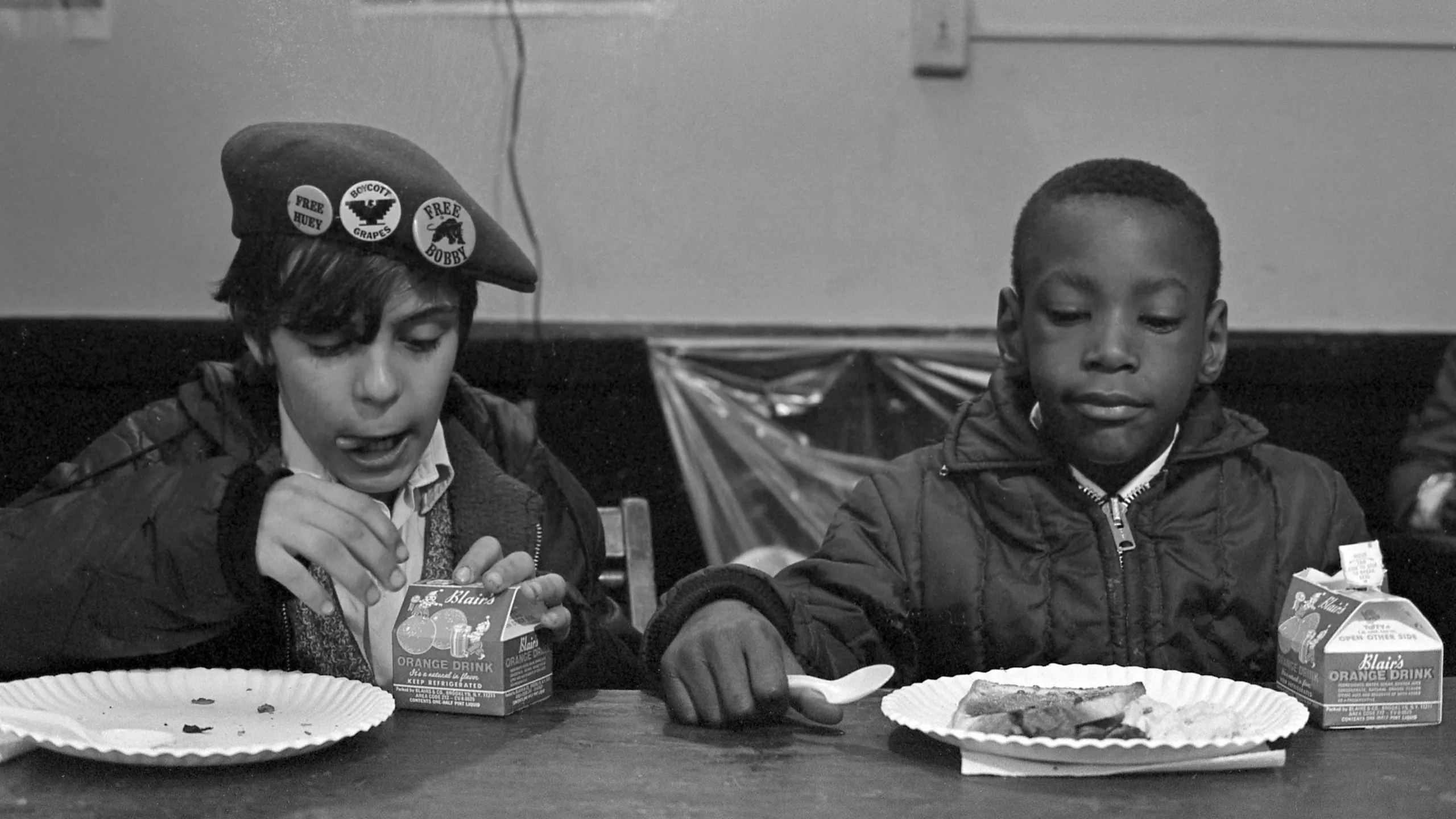
As Echols gets into the story of the Black Panther, she reveals that they had no problem working with white supporters. They took funds where they could find them in service of Black struggle. Bert Schneider, a white Hollywood mogul who helped create the Monkees and produced Easy Rider as well as the anti–Vietnam War documentary, Hearts and Minds, bankrolled the Panthers. Lawyer Beverly Axelrod, a twice-divorced single mother in San Francisco, went to work defending Eldridge Cleaver and many others. Charles Garry became a key defense attorney, as did Martin Kenner, a white student at University of California, Berkeley who experienced the Free Speech Movement in 1964 and went on to defend the Black Panther 21 in New York City. Public relations specialist and Communist Party member Hannah Weinstein was an important supporter. The interracial struggle for Black freedom continued even as a far more militant, separatist, and confrontational mood took hold among African Americans.
Echols does not view these white figures involved in the Black Power movement as secret operatives or manipulators of the movement, but rather as committed, and often crucial, allies whose stories have largely been forgotten. Her goal is not to return to Julian Bond’s narrative of white people saving the day, but instead to make sense of what kind of interracial solidarities are required for social change even as they also cause problems.
She divides her book into five sections. The first re-examines the story of SNCC through more careful scrutiny of its interracial commitments by both Blacks and whites; the next section explores how white radicals reacted to the organization’s demise. Section three takes us to the surprising white participation in the rise of the Black Panthers. Part four revisits the infamous accusations of “radical chic” hurled at affluent white liberals who supported the Black Panthers and their militant movement. The final part of the book reflects on the implications of cross-racial solitary politics into the 1970s.
SNCC was not always clearly divided between white participants advocating for integration and Blacks for separation; sometimes issues of race intersected with emerging notions of feminism; at other times, the pressing issues of how to structure the organization itself—whether it should hold on to its original, radically decentralized, consensus ethos or, due to the enormous pressure it faced in trying to overcome Jim Crow, transition into a more hierarchical form of leadership—put enormous pressure on cross-racial dynamics. By the time of the sudden demise of SNCC, in late 1964 and early 1965, FBI sabotage might have accompanied the turn to militancy (the archival sources are suggestive, but not definitive), but it also spoke to just how difficult cross-racial solidarity could be. Distrust was easy to feel.
Yet even as “fears of selling out, going soft, and opting for reform had already knotted up SNCC,” the Black Panther Party emerged from its collapse and it too included often-forgotten support from white activists. “What most set the Panther Party apart,” she notices, “was that it sought alliances and collaborations with people outside their world, often with white radicals.”. The Panthers found support among older radicals in the Communist Party of the United States of America, for instance. William Patterson of the CPUSA, as an example, helped the Panthers create a defense fund for Huey Newton after he was jailed, transforming his imprisonment into a cause célèbre.
It wasn’t just left-wing radicals who connected with the Panthers. White liberals also became prominent supporters. Figures such as lawyer Beverly Axelrod served essential roles as interlocutors for the Black Panther Party. Editors such as John Simon at Random House published many books about the movement and a small cadre of white doctors, nurses helped Panthers so that they could avoid racist encounters at hospitals. Most crucially money came in, particularly from white liberals in the entertainment industries .
Here we get to revelatory archival research from Echols as she revisits the tale of a fundraiser held for jailed Black Panthers in New York City held by Leonard Bernstein and his wife Felicia (she was actually the primary host). This event became the basis of New Journalist Tom Wolfe’s satire of “radical chic,” or the idea that elite liberals were foolishly fraternizing with Black revolutionaries who wanted to destroy them in a bizarre mix of high society and radical activists that left out “middle America.” The phrase would, of course, have lasting power as an effective conservative critique of liberal-radical and Black-white coalitions, but Echols reveals that the path to its popularization was quite puzzling.
Instead of viewing the gathering organized at the Bernstein’s as part of a long history of “cause parties,” and seeing how it brought together older and younger as well as liberal and radical and Black and white activists across boundaries of difference and power in support of a shared commitment to realizing the best ideals of American democracy, Wolfe’s critique, along with skeptical New York Times coverage of the affair, made cross-racial solidarity politics look embarrassing, even to many progressives.
Echols points out that Wolfe seemed to be a hip chronicler of American life, but in fact was a conservative Southerner by birth with a track record of racist comments in private and a disdain for elites. Echols uncovers the lie of his claim that he coined the phrase “radical chic.” The term had existed in earlier iterations, possibly coined by the leftwing journalist Seymour Krim to lambast liberals for their failure to forge solid commitments with radicals, not as a critique of such alliances. Others, such as the Old Left socialist Irving Howe and the perspective critic Dwight Macdonald, used the phrase to critique what they saw as a performative radicalism in the 1960s that abandoned the slow work of organizing for media spectacle and outlandish protest. Wolfe stole it to reduce the efforts by radicals and liberals, whites and Blacks alike to transform the commitment that the United States should live up to its ideals into a laugh line, a farce, a burlesque of Black revolutionaries in leather jackets, old Leftists, and tweedy liberal intellectuals.
Wolfe would later call the event the birth of political correctness, but Echols compellingly wields archival sources to show just how much Wolfe distorted the proceedings. To her, “Wolfe’s success in rendering the project of cross-racial solidarity nothing more than a ludicrous charade has shaped our historical memory of the Black Panther Party and the whites who supported them and altered the conversation about racism and white efforts to challenge it.” Wolf’s “radical chic” as a term did enormous damage to the fragile alliances that were emerging across boundaries of race, political persuasion, and disposition. It divided and conquered. Yet in the final section of her book, Echols notes that robust support for Black equality flourished into the 1970s, not only on the radical fringes, but perhaps even more so in the mainstream. Beyond the noise of vanguardist revolutionary groups such as the Weathermen, everyday people on juries refused to convict Black Panthers such as Angela Davis.
Echols recognizes the power of the turn away from interracialism and the patronizing politics of empathy, but she wants to defend it as well. “Encouraging people,” she writes, “to organize around their own oppression was a brilliant move, but not a magic bullet.” Without a larger commitment to solidarity with those different from oneself, movements for making the United States and the world better could get nowhere. They lacked the mass of people needed to force change and they often broke down into internecine battles over who represented the particular identity’s oppression most authentically. They closed their eyes to the need for what Zadie Smith calls “imperfect allies.”
Where does this leave solidarity politics today? A rash of new books on the topic has recently appeared. They vary in the details, but all shift from an older definition of solidarity as common cause among those sharing a common grievance to something closer to empathy, the need to forge alliances across power differentials and divergent perspectives. Workers in a factory had the same boss, but solidarity as a concept must now accommodate myriad people coming together without the crucible of a shared exploitation. That is a puzzle the right solved with its concept of “fusionism.” Can the left come up with a way to bring people together in solidarity? In our contemporary era of what one might call nothing less than authoritarian chic, the need for a broad-based opposition movement is essential.
Of course, it remains easy to cringe when centrist Democratic leaders such as Chuck Schumer and Nancy Pelosi take a knee in the halls of Congress, Kente cloth splayed across their power suits, or when left and liberal figures go at each other, doing the work of division that only helps the right. Nonetheless, hanging together is all the more essential if we are to get from embarrassing performative politics of empathy to more potent modes of solidarity.
This is a lesson Echols mostly directs at the militant left: make nice with the white liberals, her book seems to instruct them with its historical findings, or you lose; but might we also direct her historical discoveries to those liberals themselves? As the right comes for elite institutions of liberal society, as they mount an attack on American civil society in general, everyone’s civil rights are under threat. Centrist liberals are no longer safe. So even as leftwingers need to find ways to accommodate substantive alliances with the center, might centrist liberals also stop condescendingly lambasting those to their left politically? Can they find points of contact with the left rather than the right, despite the various disagreements of strategy and ideology? The encouraging election results on Tuesday seem to indicate that very possibility. To defend American democracy itself, maybe today’s situation is less about opening eyes to get woke and more about holding noses with one hand and extending a firm grip with the other.