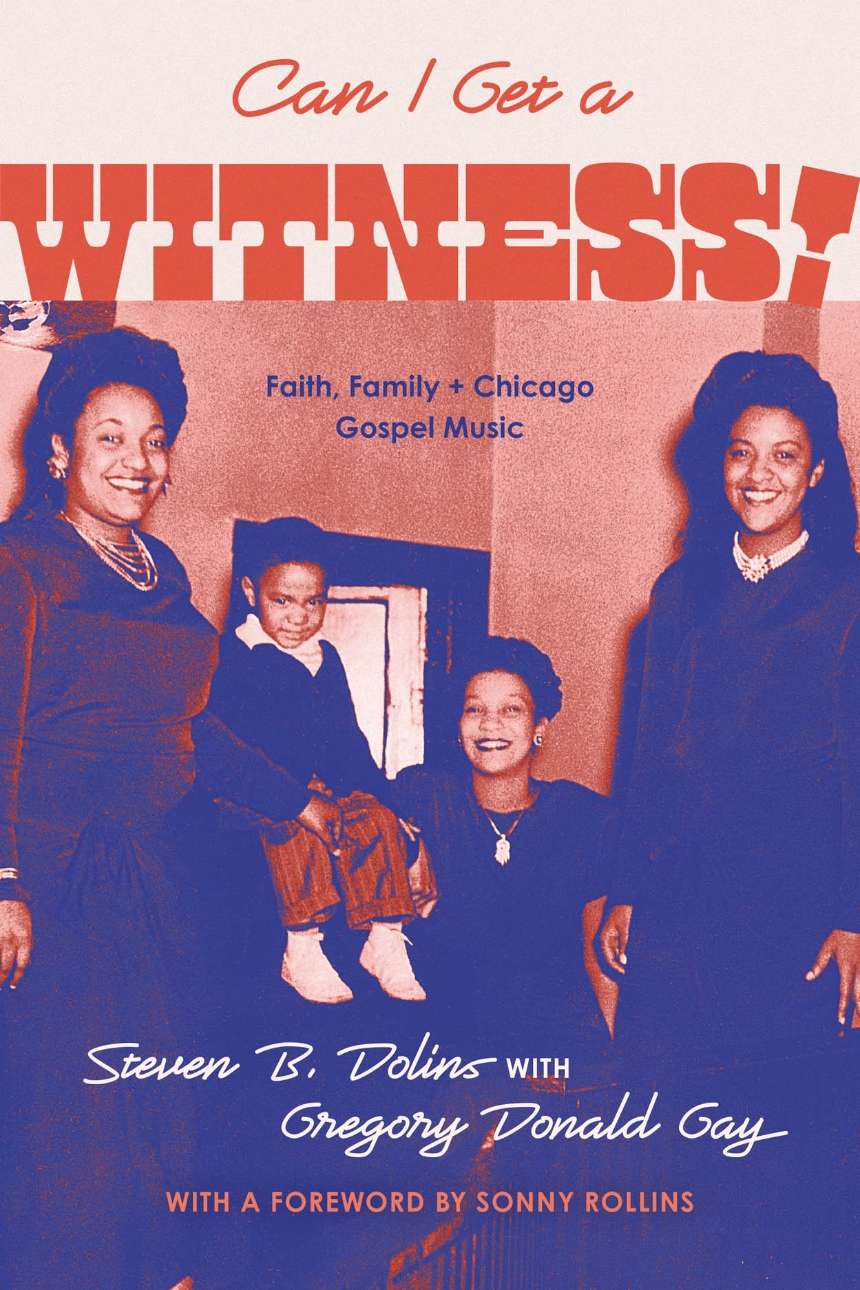
Evelyn was a natural leader—the de facto leader of the Gay Sisters. She was smart. She could make good decisions, resolve conflicts, and negotiate. She persuaded her sisters that the success of the Gay Sisters was more important than their individual goals, and she focused them on their joint career. Evelyn did all of the negotiations with Dolphin, Exclusive, Savoy, and Decca. She served as the group’s publicist and manager. Her communication skills allowed her to perform these jobs with aplomb; she was well spoken, polite, and driven.
Despite their early successes, Evelyn faced challenges. She sometimes struggled with getting Geraldine to participate in all of their performances. Geraldine was strongly independent, impatient, and noncompliant.
Evelyn’s demeanor and skill were respected by many people in the Chicago community. For example, in 1949 Evelyn was named the general chairperson of the Gospel Committee for the Bud Billiken parade. This parade was started by the Chicago Defender’s founder, Robert Abbott, and editor, Lucious Harper, in 1929 as a back-to-school celebration. It’s the largest African American parade in the United States. The Bud Billiken Parade is held the second Saturday in August and ends with a picnic in Washington Park.
For the twentieth anniversary of the parade, the organizers held its first gospel singing contest at the picnic. According to Mark Burford, a biographer of Mahalia Jackson, Evelyn was probably chosen for this prestigious position because she was a respected choral director. She was just twenty-six years old. Pastor Gay believes Evelyn held this position for several years, and he remembers going to the parades with her and hanging around the podium in Washington Park.
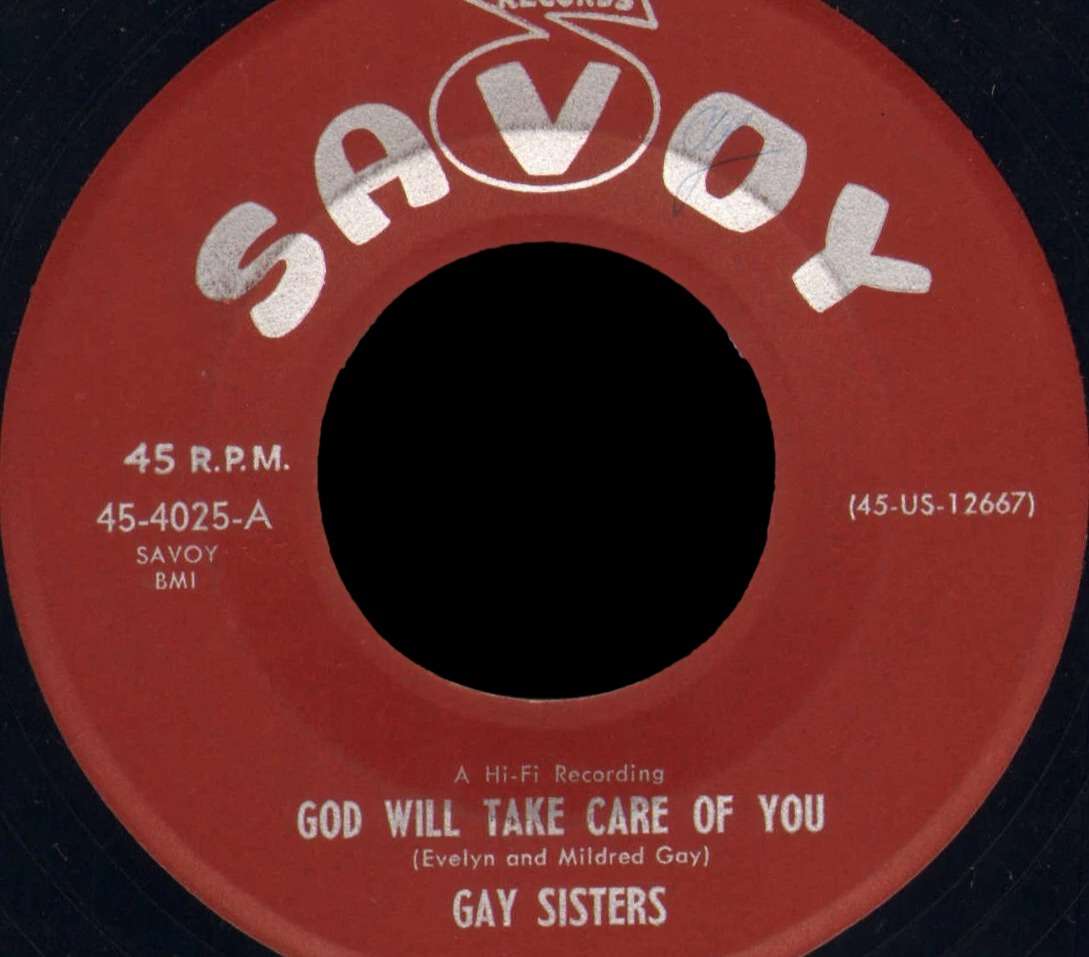
Evelyn also knew that she and her sisters needed to perform at concerts, sell records, and get exposure. They needed to capitalize on their hit record “God Will Take Care of You.” She organized tours and carried out all of the promotional work that goes on behind the scenes. She networked with disc jockeys and prominent promoters, including Brother Joe Hunter in Chicago, Herman Nash in the South, and August Jackson in the Southwest.
In Chicago, the Gay Sisters performed at various gospel programs, sometimes celebrating holidays like Mother’s Day and Easter. These programs and many of the big concerts were frequently held at DuSable High School because it had a large auditorium. Donald remembers seeing Little Richard and Reverend C. L. Franklin and his daughter Aretha perform there. He remembers Geraldine introducing him to the Franklins.
When touring the coasts and the South, the Gay family performed in churches and halls. They primarily traveled by train and stayed in people’s homes. It wasn’t until the 1960s, during the civil rights movement, when it became a little safer for African Americans to travel, that they felt more comfortable to travel by car.
In addition to doing all of the promotional work, Evelyn was Donald’s primary caretaker and mentor. From 1948 to 1950, before Donald attended elementary school, Evelyn took Donald everywhere she went, including on concert tours. After 1950 she took him on the tours during his summer vacation breaks from school. When they traveled, he never left her side.
PROMOTING CONCERTS AND RECORDS
During the tours, Evelyn was busy promoting each concert. She spread the word about the upcoming show by making radio appearances wherever they traveled. Evelyn had a knack for finding the local radio stations that played gospel music or featured African American music for Black listeners and then persuading them to put her on their show. If Evelyn was invited for a radio interview, she took Donald with her to the station. Donald describes a typical interview:
What you had to do at that time was go to the radio station and do what they call a demonstration. That is, wherever you are singing at a musicale or concert, you go to the local radio station, you advertise, and you let the people know where you are going to perform. The DJ would say on the radio, “This is Brother (Whatever his name is) and we have the Gay Sisters and their little brother, Preacher Gay here today.” And then they’d play the Gay Sister’s record and it sounded like this, “Be not dismayed, whatever betide, God will take care of you.” Then Evelyn would get on the air and say “Hello everybody, we’re here in town and we’ll be here tonight at the hall and we want everybody to come out. We are going to have a glorious time.”
Evelyn was personable and built good relationships and friendships with the DJs.
In an interview with Laurraine Goreau, Evelyn fondly remembered Vernon “Doctor Daddy-O” Winslow. He was a Black pioneer in radio and had a show on WWEZ in New Orleans. He grew up in Chicago, graduated from the University of Chicago, moved to New Orleans, received a degree from Tulane University, and was a DJ from 1949 to 1958. Evelyn spoke very highly of him. He must have had her on his show a few times.
There was possibly an interview with George Prader, who was a DJ for KGBC in Texas. He was disabled and broadcast his show from a hospital bed. Evelyn saved Prader’s publicity photograph.
Donald describes one radio visit in 1956:
One memorable radio demonstration that I distinctly remember was at KATZ in St. Louis. We would frequently go to St. Louis by train so Evelyn could visit Reverend Cleophus Robinson. They were real tight. Evelyn played piano for him. Reverend Cleophus Robinson would also bring us down to his church to sing. At that time, he was extremely devout and always wore a clergy collar.
We went down to KATZ and met Leonard Morris, who was the DJ. We’re in the station, Reverend Robinson, Evelyn, and I are sitting there, and Leonard Morris says, “I want to play something for you, listen to this.” It goes like this: “I love you, I love you, I love you.”
And Cleophus said, “Who is that?”
Leonard answered, “That’s Dale Cook.”
So, I said, “Dale Cook; no, that’s Sam.”
Cleophus said, “God is going to get him for that.” He meant that Sam was singing a secular song; he had crossed over. He didn’t stay in the gospel idiom.
Leonard responded, “Yeah, God’s going to get him, but he is going to get some money.”
This exchange shows how much the Gay family was immersed in the gospel music community. Evelyn and Reverend Cleophis Robinson were longtime collaborators and friends. Robinson was best known as a singer and recording artist, but he was also a radio DJ, had his own gospel television show and even performed at the Montreux Jazz Festival in 1975. Robinson recorded for Peacock, Battle, Specialty, Savoy, and Nashboro.
His first recordings were two sides for Miracle Records, a small independent record company in Chicago, in 1949. Evelyn was credited with introducing Reverend Robinson to Miracle’s Lee Egalnick. Robinson’s pianist was listed as “unknown” on the Miracle and early Peacock recordings. Pastor Gay thinks it was Evelyn.
Pastor Gay was only eleven years old when he was able to recognize Sam Cooke’s voice. Pastor Gay was familiar with Sam Cooke. From 1950 Sam Cooke was the leader of the Soul Stirrers, a popular Chicago gospel quartet group. All of the Gay family knew the members of the Soul Stirrers through performances and from the South Side. Evelyn recorded with Cooke and the Soul Stirrers on Specialty in 1957 and 1958. After Sam left the group, in the 1960s Geraldine recorded with the Soul Stirrers on Checker (a subsidiary of Chess).
The recording played by Leonard Morris was Cooke’s version of “Lovable” in 1956 for Specialty. It was a remake of the gospel song “Wonderful.” It was Cooke’s first foray into popular music. Using his real name, he went on to record thirty top 40 hits from 1957 to 1964 on RCA Victor.
It’s clear that Evelyn had a knack for making connections. But how did she have the wherewithal to know what to do with them?
Evelyn may have been coached by her friend, Chicagoan Jack L. Cooper. Evelyn became good friends with Cooper because he was married to Bishop William Roberts’s daughter Gertrude. Fannie was friendly with Bishop Roberts, and it was natural that the rest of Gay family would become friendly with Roberts’s family too.
Cooper is considered the first Black disc jockey in the United States. In Chicago he had a popular program on WSBC called the All-Coloured Hour, which debuted in 1929. His show featured local quartet groups. In 1937 Jack and his wife, Gertrude, hosted another show called the Quest for Choirs, which featured choirs, quartets, and jubilee groups. WSBC was only a 250-watt station, but it reached most of the Black neighborhoods in Chicago, and it was quite successful.
Not only was Cooper a successful radio disc jockey, he became an entrepreneur. He owned Jack L. Cooper Productions, and he brokered radio air time for WSBC, WHFC, WAAF, and WBEE, that is, he sold time to churches and businesses for shows and advertising.
Cooper also gave his wife and brother-in-law opportunities in radio. Gertrude became Chicago’s first female radio announcer, and her brother Isaiah became the director of religious programming.
After Evelyn moved out of the house on Champlain, she lived in apartments at 5708 S. Calumet Avenue, 6301 S. Evans Avenue, and then eventually 5639 South Cottage Grove Avenue. Evelyn moved out of the house because Buster thought his children should support themselves when they got old enough. The building she lived in, on Cottage Grove, was owned by Cooper. Cooper’s property was later bought by the University of Chicago.
Pastor Gay has this one memory of Jack L. Cooper:
Once Evelyn and I went to Cooper’s house in Morgan Park, and he had all of the radio equipment and a swimming pool! I mean this is like in the 1950s. A Black guy with a swimming pool! I thought he might get drowned in there.
TOURING WITH HIS SISTERS
The Gay Sisters toured on the East Coast. They traveled to Buffalo, New York, Philadelphia, Pennsylvania, and Washington DC. Evelyn made important contacts and friendships with influential African Americans, including Gloria Elmira Boyce in Brooklyn, New York.
Pastor Gay has fond memories of meeting “Mother Boyce” and singing for her at the Bridge Street AWME Church in the Bedford-Stuyvesant section of Brooklyn. She was an important civic leader. Later in her life, in 2015, she was named a “cornerstone resident of Brooklyn,” and the intersection at Chester Street and Pitkin Avenue was named Mother Gloria Boyce Way.
Pastor Gay has memories of these tours:
The earliest I remember traveling with my sisters was when we went to a Sanctified Church in Manchester, New Hampshire, in the early 1950s. Elder Floyd Bise was the preacher. When we got there, we put the program on. Shortly after the program, he unexpectedly died. We had to send back to my father to get enough money to bury him. Yep.
I traveled out West too. I went to California with my sisters when I was about seven or eight. We traveled around, and I preached in the different churches out there. We had been up in Carmel, and then this lady promoter brought us back to Los Angeles. We went to this one church in Los Angeles and they asked me to sing. This lady says to the bishop of the church, “Bishop, we want to raise an offering for the little boy.”
The Bishop says, “Well, reach down there and give him fifty cents.”
I was a kid and I said to myself, yeah, okay. But I made up my mind, if I ever got to be the head of a church that I would never treat anybody like that, that is, raise an offering for them and then only give them fifty cents!
On this same West Coast tour, the Gays also performed at Bishop Clyde Carson Cox’s church in Las Vegas, Nevada. Bishop Cox moved to Las Vegas in 1941. His church provided many services for its citizens, and he became a pillar of that community. They named an elementary school after him in 1986. Pastor Gay has these memories of him:
Bishop Cox was very cordial, hospitable, warm, and friendly. He had a nice brick church with pews. It was a beautiful church. We were there to sing at a program.
Bishop Cox told us, “Now don’t get caught up in the gambling out here. Be careful about the slot machines, they are everywhere.”
So, I’m with Evelyn and he takes us to the grocery store and Evelyn says, “Maybe I’ll try one of those things.” She puts some money in the slot machine, pulls the handle, the machine starts lighting up and making a racket, tat-tat-tat, and it spits out money. Money is flowing everywhere. It was just quarters, but Evelyn was shrieking, “Oh! Oh! Oh!” with excitement because she won.
Here comes Bishop Cox and he says, “Sister Gay, I told you, don’t get caught up with that. Put that money in your pocket.”
I say, What! Bishop Cox didn’t want you to associate with gambling, but the people in the gambling industry built his church.
In the Holiness Church they don’t believe in gambling.
Currently, I have a lady in my church and she tells me that she plays the lottery. I say, that’s up to you, that’s an individual matter, because the scripture says, “Judge ye not, that you be judged.” So I am not here to judge you, I am here to preach the word. God is your judge.
After Fannie and Buster enrolled Donald in kindergarten, his touring days were over during the school calendar year. There was one exception. His sisters were in Montgomery, Alabama, and they asked Fannie to have him join them for the remainder of their tour. Some of the Gay Sisters’ fans or one of the promoters must have inquired about the Boy Preacher. Fannie pulled Donald out of school, and they traveled to Alabama.
My mother and I got on the train and we met my sisters in Montgomery. We get there and we didn’t have a hotel to stay in, so at that time you had to stay in people’s houses. I remember it was so hot that I went to the door to look out and I looked on the old-time screen door, and on the screen door was a lizard. I said, Wow! You don’t see that in Woodlawn.
On this same trip we were appearing at a hall down in Mobile. We go to the hall that night, and we are all there, my mother, Evelyn, Mildred, Geraldine, and me. We sang and the place was packed. I preached a sermon called, “You Can’t Take It with You.” But when we got ready to get paid, we discovered that the promoter had taken it with him.
So, we go down to the police station to press charges against the promoter. The local gendarme said, “You can’t mess with him. He is Mr. So-and-So’s nigger. You can’t mess with him.”
Many years later, after we moved the Prayer Center to 67th Street, in 1977, I walked down to the other corner, which was Marquette and Rhodes Avenue. Next door to the store was a church. I walked into the church, and who was the preacher? The preacher was that same guy who cheated us out of the money in Mobile, Alabama. One of the ladies in the neighborhood knew who I was and she said, “This is Pastor Donald Gay. They have the church up there.”
He goes in a corner and sheepishly said, “I don’t want no problem, I don’t want no problem.”
I said, “What problem? That was a few years ago, man, you know what I mean.”
Every now and then these things will happen. Not being treated fairly at performances happened more than once and sometimes for different reasons. I remember, for instance, going to West Point Baptist Church, a church with tall windows that open up. I was a little kid and I was supposed to sing. I was up getting ready to do that, and the place had a nice crowd, and the old deacon was walking along the outer aisle and pulling the windows down. I remember I was getting ready to sing when he said, “We don’t want no mimics of the Gospel.”
So I didn’t sing. In other words, they thought I was just a kid who is not really serious about it. And kids don’t know anything about singing. And when they call me Preacher Gay, for example, they must have thought what does a kid know about preaching?
THE APOLLO AND NEW YORK CITY
Another highlight for the Gay Sisters was performing at the Apollo Theater in Harlem, which had started showcasing African American acts in 1934. Thurman Ruth, who had been in the Selah Jubilee Singers, became a DJ and concert promoter. He organized gospel concerts at the Apollo in 1955. It was the first time gospel music concerts were presented at a commercial theater and not a formal classical music concert hall. He called his concerts Gospel Caravans.
The Gay Sisters and Donald appeared at the Apollo shortly thereafter, sometime in 1956. Here is what Pastor Gay remembers:
I remember Alex Bradford, who I knew very well, was in the show. He wrote a song called “I’m Too Close.” This woman from Oklahoma, Jessie Mae Renfro Sapp, was also there. Her big hit was “Wonderful.” Then Sam Cooke came along and did his own rendition of it [“Wonderful”].
They also had the Davis Sisters out of Philadelphia. They would go out and sing in robes, and when they went backstage the lead singer took off her robe and she’d have on bib overalls. They called her “Baby Sister.” Also on the bill was the Harmonizing Four.
We had a cousin, Muriel Hudson; Geraldine was very fond of her. When we went to the Apollo, my aunt sent Muriel with us. Geraldine took care of her, looked out for her, and developed a great relationship with her.
It was around the time of their appearance at the Apollo that they went to Mercury Records in New York City.
We made the rounds to the record companies, and we went to Mercury Records to see Bobby Shad. He said to Evelyn, “I like your brother’s singing. I can do something with him.”
He said to me, “I have this song for you. But instead of saying Jesus I want you to say ‘he.’”
I was so devout in the church, so I said, “‘He?’ No, I can’t do that. I have to say ‘Jesus.’”
And Evelyn, too, said no, you know. She thought it was sacrilegious, and she didn’t want the family to sell out.
A year or so later, this kid comes in, his name was Laurie London. He comes in and sings the song and it goes like this, “He’s Got the Whole World in His Hands.”
I say to myself, Dang, you kind of right there boy. And, of course, my mother was like, “Oh, no, don’t give the Lord away.”
I said “Yeah,” but under my breath I’m thinking, What an idiot I am.
LATER IN MEMPHIS AT WDIA
As she did with other DJs across the country, Evelyn made a connection with Brother Theo “Bless My Bones” Wade. Wade started out as a gospel singer for the Mount Olive Wonders in the late 1920s and later joined the Spirit of Memphis as their manager and singer. He became a DJ at WDIA in Memphis. He started his gospel show “Hallelujah Jubilee” in 1949, and it became increasingly popular in the 1950s. It ran from 4 a.m. to 6:30 a.m.
Wade also hosted a Saturday morning program called “Jubilee Roll Call,” where he played the gospel hit songs of the week.
WDIA started in 1947 and was one of the first radio stations in the United States to be programmed exclusively for African Americans. Besides gospel programming, WDIA played blues and rhythm and blues. It hosted programs by notable disc jockeys and musicians such as Riley “B. B.” King, Rufus Thomas, and Dwight “Gatemouth” Moore. I suspect WDIA is where B. B. King, and many gospel music fans, listened to the Gay Sisters’ music.
The radio station started a goodwill fund to help the African American community in Memphis. For example, it raised money for a school for physically handicapped Black children. It sponsored fundraiser concerts called the “Goodwill Revue” and the “Starlight Revue,” which were held at Ellis Auditorium. Goodwill was held in the winter and Starlight in summer. Donald remembers these concerts.
I don’t know how Evelyn finagled it, but she got us on the Goodwill and the Starlight Revues. At these concerts we met Rufus Thomas, who was from down there. He was a very nice, cordial guy. He was a DJ, and he came out with a song called “Walking the Dog.” I liked his voice although it was a bit gravelly.
He also had a daughter named Carla who was at the concerts. Besides singing, she was planning to go to school to become a school teacher, but then I never heard anything more about that. Rufus and Carla were frequently the opening act. When we played the Starlight, they also had the Marvelettes perform.
At one of our concerts at Ellis Auditorium, both Bobby “Blue” Bland and Junior Parker were performing too. We were back stage and everyone was talking and laughing and then these two well-built and well-dressed white guys walked in. Everyone got quiet. They definitely stood out in a crowd. I thought we were being busted by the FBI!
Then who comes in and follows them? Elvis! Evelyn told me to snap a photo on my Polaroid of Bobby “Blue” Bland, Junior Parker, and Elvis. I fumbled around, but eventually I pulled out my instamatic Polaroid camera and captured the moment. I was very proud of myself until I later discovered that I had no film in the camera. Recently, I saw a photo on the internet of Bobby “Blue” Bland, Elvis, and Junior Parker, backstage at the Ellis Auditorium and I was thinking I was about five yards away from that historic moment.
Excerpted from Can I Get a Witness! by Steven B. Dolins with Gregory Donald Gay. © 2026 by The University of Chicago. All rights reserved. Reprinted with permission.