
Virginia Eubanks will be speaking as part of CMU’s Center for the Arts in Society’s “Repair Initiative” on October 28th, 2026 at 5PM in the Frank-Ratchye STUDIO for Creative Inquiry.
Dr. Eubanks will also be leading on on-campus workshop on October 29th from 12-1:30 entitled “Writing about the Caring Life.”
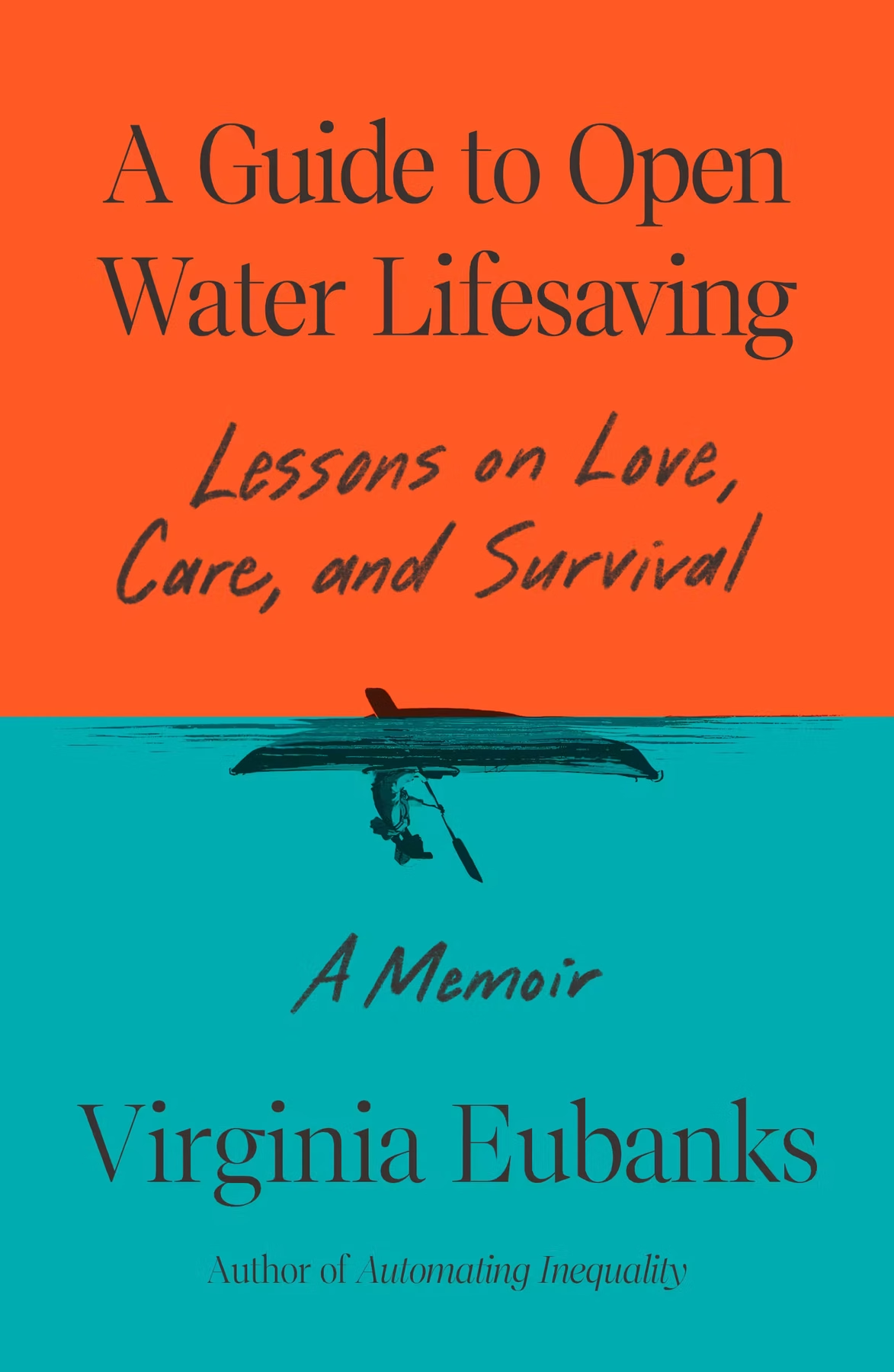
Author Introduction: In 2015, my beloved partner of more than a decade was the victim of two violent attacks, and I was launched into a new life as a caregiver to someone with severe and chronic post-traumatic stress disorder. Together, we faced a cascade of systemic failures: a hospital that didn’t keep him overnight after six and a half hours of surgery to repair his face and skull, suspended health insurance, disinterested law enforcement, lost income, endless paperwork, a behavioral health crisis unit that turned him away at one of our worst moments. In 2021, I was diagnosed with my own case of what is known as secondary traumatic stress disorder or “collateral PTSD,” not uncommon among caring kin, but rarely discussed.
An investigative journalist by trade, I turned to the tools I knew best to protect myself while supporting my partner. I dug into the research and literature on PTSD and caregiving. I reached out to sources: scientists, therapists, trauma theorists, social movements. I started taking notes, doing a deep reporter’s dive into my own life.
But it wasn’t until I stumbled on an unusual resource – the United States Lifeguarding Associations’ manual for open water lifesaving – that I found a resource that truly helped. That book launched a series of survival trainings. I studied kayak self-rescue, map and compass, bushwhacking, winter survival, wilderness first aid, psychological first aid. I enrolled in an American Red Cross lifeguarding certification that took place over one winter week at my local YMCA.
***
The Open Water Lifesaving manual calls rip currents “the drowning machine.” They are the primary cause of swimmer distress in open water, necessitating 80 percent of rescues at surf beaches. Randy Lascody of the National Weather Service found that rips in Florida caused more deaths than “hurricanes, tropical storms, tornadoes, severe thunderstorms, and lightning combined.” The terrible irony is that rip currents can look like the safest water on the beach. An area of calm between two sets of turbulent waves often indicates a rip, and many people enter the most tranquil-appearing spot only to be sucked rapidly away from shore.
A rip current has three parts: the feeder, which is the wide in-take area at the beach; the neck, which is the long river of water running away from the beach, moving as quickly as four miles an hour; and the head, where the current is exhausted and the waters dissipate back into the sea. Most people caught in a rip current don’t even realize it until they notice that they are making no progress swimming or are suddenly half a mile offshore. It’s easy to panic and exhaust yourself trying to reach the safe world of umbrellas and suntan lotion disappearing over the horizon.
The National Weather Service advises that if you have energy, you should swim perpendicular to the current (often parallel to the beach) until you emerge from the neck, and then let the waves bring you back to shore. If you have already exhausted yourself, you should float and wave for help. Research shows that if a swimmer caught in a rip current can float or tread water for about three minutes, there is a 90 percent chance they will be deposited back on shore. The danger of this do-nothing strategy is that you may
reenter the feeder as you near safety, only to be sucked back out to sea. It’s called being “recirculated” by the rip.
*
If a loved one is trapped in a rip current, you might be tempted to dive in to save them. But it is so likely that you will drown yourself rather than emerge a hero that researchers have invented a name for the phenomenon—aquatic victim-instead-of-rescuer (AVIR) syndrome.
In a 2011 study, Richard C. Franklin and John H. Pearn found that 17 people in Australia died in one five-year period attempting to save someone who appeared to be drowning, usually a child. Yin-chao Zhu and his colleagues found that 18 percent of the deaths in 225 rescue incidents in China in 2013 were due to AVIR; death rates were higher for rescuers (13.3 percent) than primary drowning victims (11.5 percent). Researchers in Turkey studied 88 drowning incidents involving AVIR, some with multiple victims, that occurred between 2005 and 2008. Bystanders rescued about half the initial drowning victims: 47 people were saved. But in the process, 114 would-be rescuers drowned.
Summing up their survey, Zhu and the team from the Ningbo Municipal Center for Disease Control and Prevention wrote, “Most of the currently employed life-saving methods are dangerous and even potentially life threatening [to rescuers].” To protect both initial drowning victims and those who might attempt to save them, they argue, we must teach rescue skills to the general public and embrace the philosophy of “rescuers’ safety first.”
AVIR syndrome is common in the United States as well. In May 2025, a New Jersey man jumped into a Poconos lake to try to save two kayakers who had fallen into the water. The man drowned; the kayakers, who were wearing personal flotation devices, survived. A few weeks later, on Father’s Day, a dad drowned after jumping into the water at a Fort Lauderdale beach in an attempt to rescue two of his children. Fort Lauderdale Ocean Rescue lifeguards, who had just gone off duty, returned to the scene and saved the two children. In July, a twelve-year-old girl on an inflatable tube drifted away from her family in a Utah reservoir. Her brother-in-law jumped on a paddleboard to save her but fell off and drowned; the girl survived.
AVIR occurs when the courage of would-be rescuers outstrips their competence. Rescuers tend to both overestimate the danger to the rescuee and underestimate the danger to themselves. They lack the skills and fitness needed to perform lifesaving safely. A 2013 New Zealand survey found, for example, that while 47 percent of respondents would jump in the water to save a drowning person, only 38 percent reported being able to swim one hundred meters.
Franklin and Pearn have a more poetic, if grimmer, name for AVIR syndrome. They call it “drowning for love.”
*
In the American Red Cross course, I learned how to clear an airway, stop bleeding, treat burns, recognize anaphylactic shock, and breathe for someone whose lungs have stilled. I learned to use my rescue tube to extricate myself and a drowning victim from deep water, pulling us both up the towline toward the surface.
I also studied self-protection. I learned to enter the water flat-footed and with knees bent, to minimize my chance of injury from striking objects hidden beneath the surface. I learned how to remove contaminated latex gloves without infecting myself, how to talk to an unruly kid or a hostile lap swimmer.
In the class, we were reminded over and over again that communication is a lifeguard’s most important skill, that the most crucial steps in a crisis are blowing your whistle to alert others, calling emergency medical services to request more skilled support, and making sure there is another lifeguard to cover your surveillance area once you head toward a victim. None of us works alone, we were taught. Each of us is simply a link in the chain of survival.
*
Saving a drowning stranger is a popular baseline for moral behavior. The idea is so widespread that ethicist Peter Singer’s concept of effective altruism is premised on a story about how any reasonable person would save a toddler drowning in a shallow pond. And yet many lifesaving experts advise untrained rescuers never to go in the water to save someone else. Instead, if you see someone drowning, call emergency medical services, provide the victim with flotation, reach out to them with a stick, throw a rope, row to them and extend an oar. Tell them to flip over and float on their back until a trained rescuer with a flotation device can extricate them safely.
But there is a double bind in open water rescue: going into the water to save someone who is drowning might kill you, and yet bystander action is an important factor in drowning victims’ survival. The faster the rescue, the better chance rescuees have of surviving. Outcomes are better if resuscitation begins before emergency medical services arrive.
We should champion bystander courage, Franklin and Pearn argue. But the way to prevent AVIR is to equip everyone, before tragedy strikes, with the training and tools they need to perform heroic acts.
Bystanders do perform rescues, even when there is great risk to their safety: multiple victims, ice-cold and deep water, poor underwater visibility, no support or equipment available. It’s a stupid thing to do. It is often the only option. And sometimes it works.
*
On the last day of lifeguarding class, we learned to break neck holds. The procedure was briefly described in our manuals in a section titled “When Things Do Not Go as Practiced.” But escaping the clutches of a panicked drowning victim is best learned by doing—in the pool.
The instructor asked us to pair up, and Adonis chose me for his partner. As the other students gently pushed each other an inch or two below the surface, I warned him: “I’m really going to come at you. You ready?”
He nodded, nervous, and I lunged at him, grabbed his throat, and started to drag him down. He plunged into a deep feet-first dive, grabbed my arms, tucked his head, and shoved me back with real force. When we both surfaced, his eyes were wide behind his goggles. “Good job,” I said. “Let’s do it again.”
I lunged, threw both my arms around his chest, pinning his arms to his sides, thrashing like I was trying to climb him out of the water. He sank like a stone, pulling me down toward the bottom of the pool. He used his superior breath control to wait me out nine feet under. I had exhausted myself at the surface and released him, popping back up to the air above like a cork, laughing.
We switched, and I practiced breaking head holds, too, managing to escape his somewhat less vigorous attempts to pull me under. Mostly, I was feeling proud of him. I fingered the small bruise developing on my cheekbone where he had accidentally elbowed me while trying to get away, glad he had taken the exercise seriously.
I wasn’t the instructor, but I was a grown-up, and I was realizing that I was fully committed to protecting Team Caregiver. I wanted these young people to be able to save themselves. If this kid is genuinely surprised by someone grabbing him at a country club pool this summer, I thought to myself, I want him to break that hold. I wanted his body to remember what it feels like to be free.
Excerpted from A Guide to Open Water Lifesaving Copyright (c) 2026 by Virginia Eubanks. Used with permission of the publisher, Macmillan Publishers. All rights reserved.